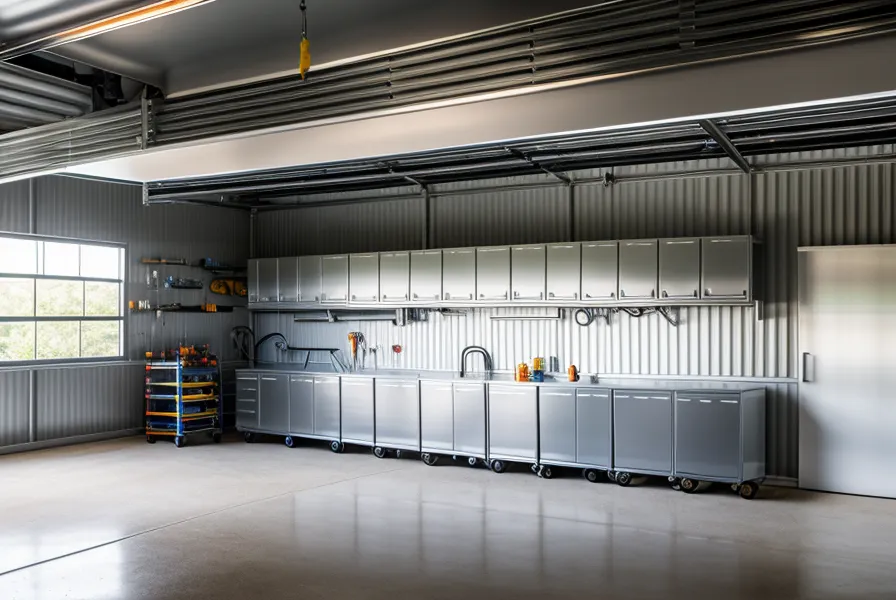
How many gallons of water could you actually carry out of your garage by hand if the driveway started flooding and the power had already been out for a day? Not siphoned, not pumped, just carried. That's the question most suburban water storage advice skips past, and it's the one that ended up splitting my whole approach to suburban preparedness into two systems that don't get along with each other. Hurricane Beryl knocked our part of Katy off the water grid for four days, and in the time since, I've spent a lot of weekends footer-a116d1 testing everything from a warehouse-style drum to stackable jugs in the same two-car garage, trying to answer that question properly instead of just buying the biggest thing I could find. Hurricane prep gets sold as a single decision (buy the big thing, fill it, done) when really it's two separate decisions wearing one trench coat.
The first time I learned that lesson the hard way, I'd stacked five cases of bottled water from Costco in the pantry before Beryl hit, certain that was plenty for whatever came next. It was gone by the second day of the outage, split between drinking, brushing teeth, and flushing a toilet that suddenly needed help. That failure is what sent me toward bulk storage in the first place, and it's also what set up the argument this article is really about: a single large footer-a116d1 against a distributed one, and which actually holds up once you need it, not just once you buy it.
Case One: The 55-Gallon Barrel
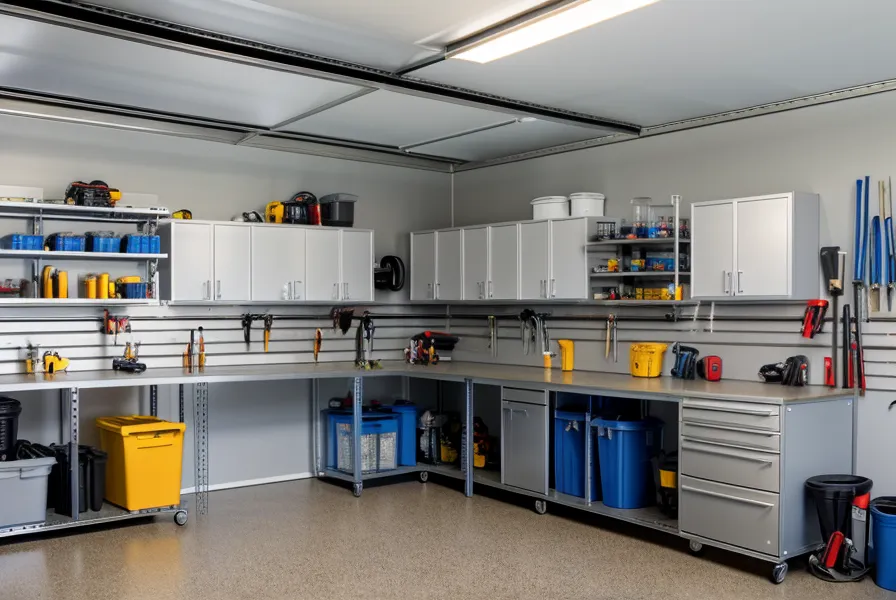
A drum like this stands about 35 inches tall, built for a warehouse pallet and a forklift, not for a two-car garage corner. Water weighs roughly 8.34 pounds per gallon, so a full one anchors more than 450 pounds to a single patch of concrete slab. In IT terms, that drum becomes a single point of failure: the one aging router your whole network quietly depends on without anyone ever testing what happens if it goes down.
Moving it once it's full is where the plan falls apart. I got the barrel about a third full and tried to shift it a few inches during a heavy spring rain, worried about moisture pooling behind it, and the whole thing leaned into a slow sideways lurch that told me exactly how little control I actually had over four hundred and fifty pounds of liquid. Mel, the neighbor who won't trust a single piece of gear until he's personally watched it fail, called while I was out walking near the spillway at Barker Reservoir and asked if the drum had cracked yet. It hadn't. But I also hadn't moved it since.
Actually Moving It When It Matters
Doorway width turns out to matter more than capacity. Standard interior doors run around 30 to 32 inches wide, which a stackable 5-gallon or 7-gallon footer-a116d1 clears without a second thought, but which turns a bulky drum into a genuine obstacle if you ever needed to relocate it indoors. I've written separately about the ergonomics of not wrecking your back — or your marriage — over this exact problem in managing a garage water reserve without losing your mind, and it's worth a read before you commit garage space to either system. None of this touches what you'd throw in a car for a fast evacuation, which is its own smaller, more portable problem with a different set of trade-offs, or what a specific filter actually strips out of questionable water, which varies more between models than most people assume.
Case Two: The Modular Stack
Case two skips the drum entirely and treats water like a distributed system instead of one big tank. My current setup mixes a tall, narrow tower-style tank against the back wall with a run of 5- and 7-gallon stackers along the side, and figuring out how much total capacity that kind of combination actually needs before you buy any of it is a planning exercise worth doing on paper first. I ran that math separately when I stacked a tower-style tank up against drums directly. Going vertical instead of wide also changes your floor footprint more than you'd expect: the same total gallons that used to eat a full corner as one drum now run up one wall, three units high, without blocking the cold-water tap I keep set up just for filling and flushing whatever I'm testing that week. A test strip dipped into the tower tank during a routine check came back matched to the safe end of the color key — no drama, which around here counts as a good day.
Rotating Water Without Turning It Into a Chore
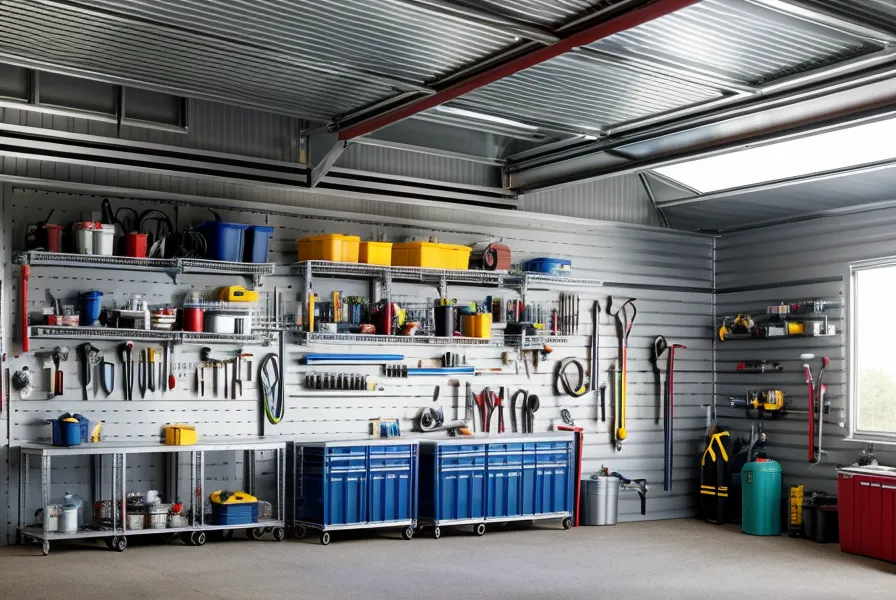
Whatever rotation schedule you eventually settle on, Katy summers push you to check it sooner than the calendar suggests. I've broken the full schedule down on its own elsewhere, so I won't repeat all of it here. What matters for this comparison is that a garage in July behaves like a slow cooker, and heat plus standing water gives biofilm exactly the conditions it wants inside a footer-a116d1 wall. Tracking how a full season of that heat actually stresses different plastics is its own project too. Rotating a drum means a hose, a pump, and most of an afternoon; rotating a jug means dumping it on the garden or into a bucket and refilling it at the tap, using whatever low-dose treatment you trust and checking that its shelf life hasn't quietly expired in the garage. Cleaning a footer-a116d1 properly before you refill it is a separate protocol from just rinsing it out, and knowing the difference between purifying water and filtering it saves you from treating one problem like it's the other.
What to Check Once the Tap Comes Back On
Getting water back doesn't mean it's automatically safe to drink. Especially after flooding has had a chance to get into the system, that's its own contamination risk sitting on top of the supply problem, separate from anything a footer-a116d1 can solve. Testing what comes out of the tap before you trust it again is a step worth taking seriously rather than assuming service restored means water clean. None of this replaces knowing roughly how many gallons per person your household actually needs per day, which is math worth doing once and keeping around, or understanding that a gravity filter's flow rate is its own trade-off: reliable, but slow enough that I keep a running comparison of which ones still keep up with a thirsty family under real pressure.
Choosing the Right Suburban Water Storage Setup
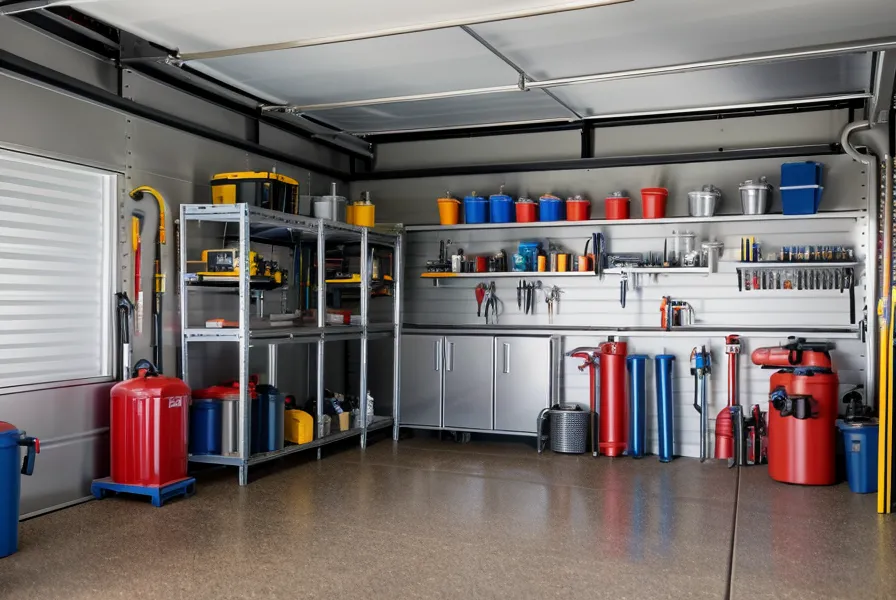
My neighbor Sandra messaged me after finding my notes on the neighborhood app, family of four, more worried about ease than about squeezing out every last gallon, and that conversation is what finally clarified the choice for me. She didn't want a science project sitting in her garage. She wanted whatever she'd actually keep rotating three months later without a reminder. That's the real test for either case, more than which one wins on paper. A single large drum can make sense if you have the floor space to dedicate permanently, the physical ability to manage an occasional full-hose rotation, and a household that won't need to move it in a hurry. A modular stack makes more sense for almost everyone else — smaller households, anyone without a spare corner to sacrifice, or anyone who, like Sandra, wants a system a single person can lift, refill, and trust without scheduling a whole afternoon around it. If you want the layered version of this thinking applied to a full household security plan rather than just containers, I laid that out in the IT guy's logic for suburban water security, and if you're trying to figure out how long whatever you choose actually stays good on the shelf, that math is in how long you can store water before it becomes unsafe.
None of this is about hoarding as much water as physically possible in a corner of the garage. It's about picking a system you'll actually maintain once the adrenaline of buying it wears off. My spouse still gives the setup a sideways look every time she needs to get past it for the holiday decorations, but at least these days the whole thing rolls out of her way instead of needing two people and a lower-back specialist.