Brown water came out of the kitchen tap for about four seconds before it ran clear again. Nothing was actually wrong — a contractor two streets over hit a main, according to the city alert — but for those few seconds our emergency water filtration setup went from theoretical to real, the same way it did during the four-day outage Hurricane Beryl left behind.
Quick housekeeping before we go further: this site runs on affiliate links, including the one attached to the Dark Reset below — if you buy through it, I earn a small commission at no extra cost to you. I only put gear in front of you after running it through actual testing in my own kitchen and garage, not because a press kit told me to.
Why Fast Filtration Beats Big Storage When You Just Need a Glass
IT support work trains you to think about redundancy — backups on backups — and that instinct is exactly what shaped our garage water setup after Beryl. Storage towers, filtration rigs, chemical treatments: we had layers (my spouse has other words for it besides 'redundancy'). What that setup didn't account for was latency, which in networking is the delay before a transfer starts, and in water prep is the gap between being thirsty and actually getting a sip. A bulk system that can't leave the garage is useless in that gap; a portable filter earns its keep on exactly that speed-to-first-drink problem, which is the whole case for keeping a Dark Reset in a kitchen drawer instead of a storage closet. The one-gallon-per-person-per-day figure you've probably seen for planning household water storage is a tool for the storage side of that equation — it has nothing to do with how fast water reaches your mouth once the tap goes bad.
Where a Portable Filter Fits Next to Bulk Storage
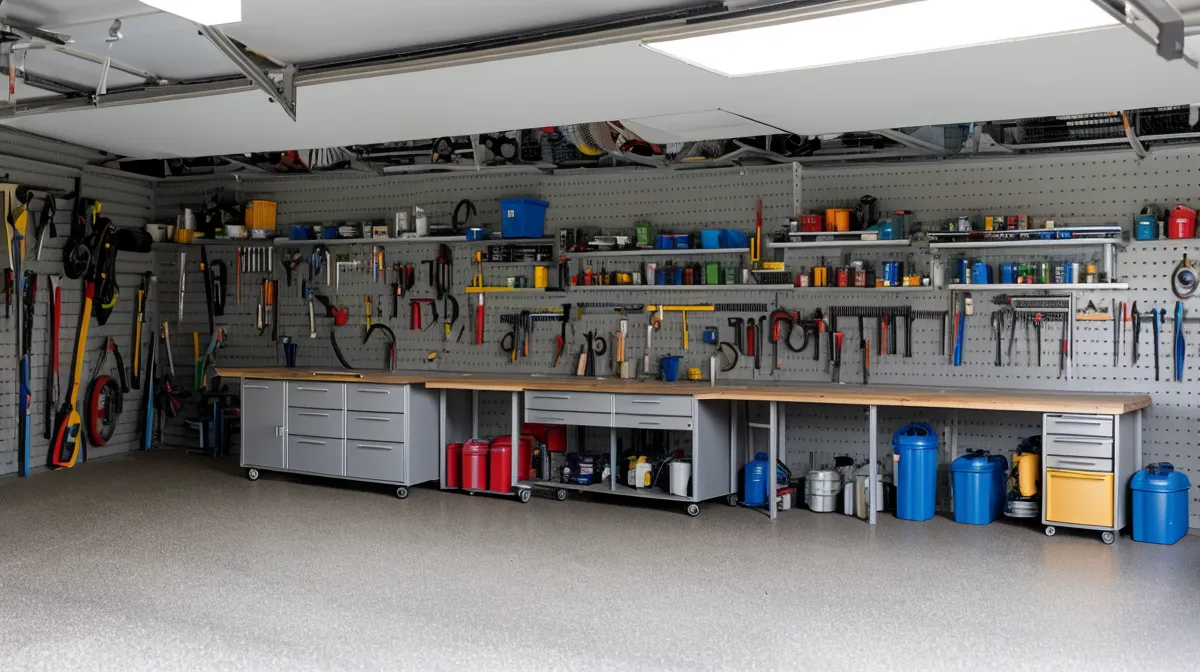
I've gone deep on the storage-capacity side of this before, testing how much water a garage can realistically hold, in The IT Guide to Not Dying of Thirst: My 18-Week Houston Garage Water Lab — but most suburban water emergencies aren't a grid-down week, they're a boil water notice or a pressure drop that clears up in a day or two. None of that storage math helps if you have to spend fifteen minutes priming a heavy-duty pump like the SmartWaterBox just to get a single glass — the setup cost is what keeps big rigs sitting unused for small problems. The vertical-storage-footprint question, how tall you can stack containers before the bottom row is bearing weight it wasn't built for, is a real one; it's just not the one that matters in a moment like this.
Pull a full glass from the SmartWaterBox spigot after it's sat untouched in the garage for weeks, and it still runs cold with no ring of sediment at the bottom of the glass — I've checked more than once. The storage side of this does its job. It's just not the tool you reach for when you need water in the next five minutes.
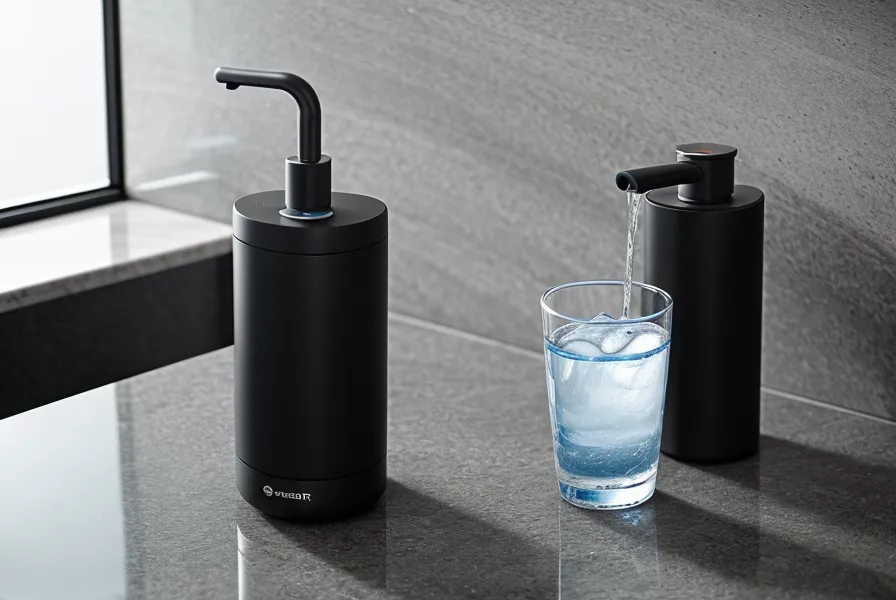
The mechanism inside the Dark Reset is a hollow fiber membrane, which is a fancy way of saying the pores are small enough to strain out what a boil-water notice is actually worried about — no chemicals, no waiting on a reaction to finish. Purification and filtration get used like synonyms in a lot of prep articles, but they're different mechanisms with different tradeoffs, which is a longer conversation than this particular post has room for.
What Actually Happens When You Pump the Dark Reset
Setup is the whole selling point here. The hose end goes in the source water, the pump end goes over the glass, and you start pumping — no soaking, no priming, no manual to read first. That matters more than it sounds like it should, because the fussier a filter is to set up, the less likely you are to actually use it for something small, like topping off a water bottle before running an errand instead of just grabbing whatever's already cold in the fridge.
Compare that to a gravity filter tested for the same job — the kind you fill at the top and let drip through a ceramic or carbon element into a reservoir below. It worked, technically, but it took roughly forty-five minutes to produce a single gallon, which is fine if you're settled in for the evening and not useful at all when the water's out and you're mid-task with wet hands and a dwindling glass. Gravity-filter flow rate is worth researching on its own if you're building a whole-house or long-term setup, but as a grab-and-go tool, that shape is wrong for the job.
The World Health Organization puts basic daily hydration at around two liters per person, and for a family of four on a slow filter, hitting that number turns into a full-time job. Ration water because the filter can't keep up, and dehydration follows, and dehydrated people make worse calls — like troubleshooting a generator while lightheaded. That's the actual decision rule buried in all of this: if a filter can't keep pace with two liters per person without turning into an hour-long chore, it isn't solving the problem you actually have.
Tablets, Shelf Life, and the Speed Tradeoff
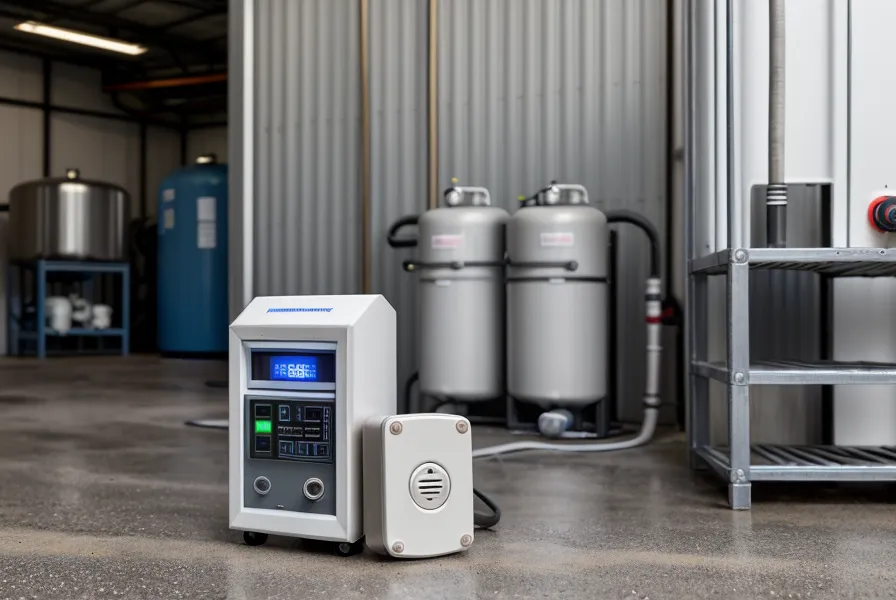
Chemical purification tablets are the other cheap, packable option, and there's a full side-by-side in Dark Reset vs Traditional Purification Tablets if you want the details. Short version: tablets take about thirty minutes to work and leave water tasting like a public pool, and they carry their own shelf life you have to track and rotate before they lose potency — one more line item on a checklist that's already too long. A pump doesn't expire sitting in the back of a drawer.
Keeping the Filter Ready Between Emergencies
Two maintenance habits keep the Dark Reset useful instead of turning it into a science experiment sitting in a drawer. Hollow fiber membranes can crack if they freeze while still wet, which is rare in a Houston-area winter but not impossible — the 2021 freeze made that clear enough for plenty of us. So it stays inside the house rather than an unconditioned garage, where a cold snap could catch it holding water.
Backwashing matters just as much. Skip clearing the filter after use, and sediment works its way into the fibers the same way a paper jam builds up in a printer nobody ever cleans — annoying, then eventually broken. Running clean water through it in reverse once the taps are back on takes about a minute, and it's really the same discipline as rinsing storage containers before a refill: footer-a116d1 sanitation and filter maintenance are the same habit pointed at two different pieces of gear. A rotation schedule for stored water is its own separate checklist, and all the storage-capacity planning done for the garage doesn't matter if the one piece of gear that's supposed to be fast gets ignored in a drawer.
The Verdict for a Family That Just Wants a Glass of Water
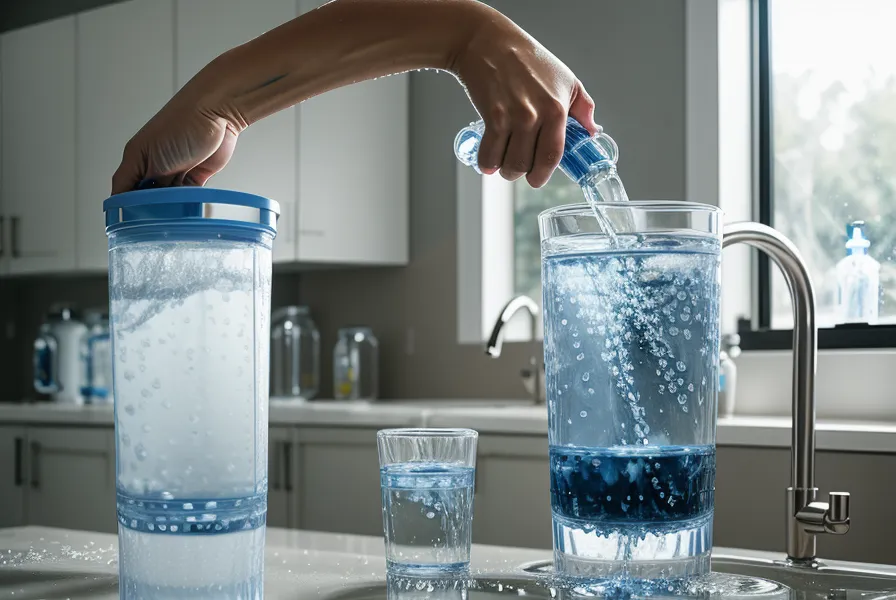
None of this makes the Dark Reset a replacement for real water storage — that's still the primary supply, the same way a server still needs its main database and not just a cache. What it replaces is the panicked trip to the store, or fifteen minutes spent wrestling with gear built for a longer emergency than the one actually happening. Check local advisories and talk to a professional about anything specific to your situation — a kitchen-drawer filter is not a substitute for that — but from a practical standpoint, keeping a Dark Reset on hand is the lowest-effort layer you can add to a water plan.
The families who actually use their emergency gear are usually the ones who bought something they didn't have to think about — no manual, no soaking, no ten-minute assembly before the payoff arrives. If a water plan currently lives entirely in a locked cabinet in the garage, adding a Dark Reset to the kitchen drawer closes the gap between having water somewhere in the house and actually being able to drink it in the next few minutes.