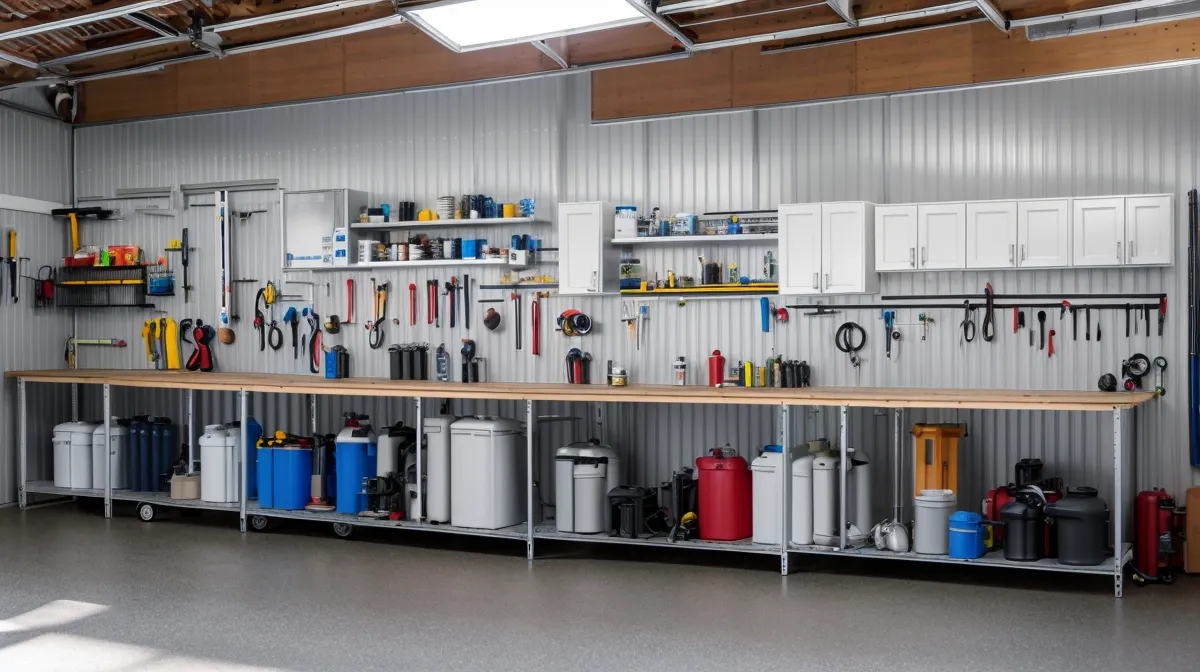
David's Shield fills a liter bottle in roughly half the time the Dark Reset takes — and after months of testing both emergency water filters side by side through the same abuse in my garage, that speed gap turned out to be the least useful number for deciding which one earns a permanent spot on your shelf. Flow rate matters when your family is thirsty and the power's out. Durability matters when the filter has been sitting untouched since last hurricane season. Only one of those things shows up on the box.
Update (September 2026): Aqua Tower is no longer available for purchase; this article is kept for reference. Our current alternative pick in this category is Water Freedom System.
Quick disclosure before we get into it: the links to both filters below are affiliate links, and I earn a small commission if you buy through them — at no extra cost to you. I bought and ran both units myself, which is more than I can say for a lot of the "reviews" floating around for this gear. I'm not a water safety expert or a doctor. I fix computers for a living and point that same troubleshooting instinct at water filtration, so treat this as one guy's testing notes, not medical advice — check with your local health department if you're facing an actual water crisis.
Speed Isn't the Whole Story for an Emergency Water Filter
Bandwidth and uptime are two different metrics, and filters work the same way. When I lined up David's Shield next to the Dark Reset, I wasn't just clocking how fast either one turned murky water clear. I wanted to know which one would still be trustworthy a year from now, sitting in a hot garage between emergencies. Chemical treatments like purification drops carry their own shelf-life clock you have to track and rotate — a mechanical filter doesn't expire the same way, which is a big part of why I lean on filtration as the first line of defense and treat drops as a backup rather than the main plan. Real-world reliability, the kind that shows up after the water's already out, narrows the gap between those two approaches more than the marketing on either box suggests.
Cracking open both boxes that first week, the cardboard had already gone a little soft and damp just from sitting around in Houston humidity — not exactly a confidence boost before the actual testing even started. Most people buy a filter, toss it in a closet, and never test it until the day they need it. That's the equivalent of buying a router and never plugging it in to see if it handles your household's traffic.

How Much Water Does a Family Actually Need?
Both filters rely on the same hollow fiber membrane approach and are rated to the same lab-tested bacteria reduction standard used across this category; I'm not going to pretend I can explain the membrane science better than the manufacturers already have. What I can tell you is what it's like to actually hit your household's daily number. FEMA's minimum guidance works out to roughly a gallon per person per day, and I've broken down that math in more detail elsewhere — the short version is it adds up to a real amount of water moving through a filter every day, not just a few sips before bed.
I ran both units off roof runoff during a stretch of heavy rain — water that had crossed shingles and gutters and picked up a decent amount of sediment on the way down. If you want the deeper dive on gravity setups generally, including how flow rate holds up across different filter brands, I covered that separately in Best Gravity Water Filters for Families During a Long Power Outage.
The Flow Rate vs. Longevity Tradeoff
This is the core tradeoff, and it's worth sitting with. David's Shield is built for throughput — even with slightly murky rainwater, it filled a liter bottle noticeably faster than the Dark Reset. When you're trying to hit your family's daily gallon target before dinner, that speed is not a small thing; nobody wants to babysit a dripping bag for an hour. The Dark Reset, slower as it is, barely seemed to notice when sediment built up at the bottom of the bag. Its total filtration life — how many gallons it can push through before the membrane is done — is clearly built for a grid-down-for-weeks scenario rather than a hurricane-recovery-for-a-few-days one.
I made a dumb mistake during this test that's worth admitting: I skipped pre-filtering the water through a plain cloth first, and David's Shield slowed to a crawl after the second gallon because sediment started clogging the intake. Back-flushing it fixed the problem in about the time it takes to reboot a router, but it's a step I should have planned for from the start. The Dark Reset never needed that kind of intervention. It just kept its slow, steady pace, but it also never came close to the Shield's top speed even on clean water. I've made worse mistakes than that with containers, for what it's worth. I once followed a YouTube tutorial on bleaching a storage footer-a116d1 and ended up with water that tasted like a swimming pool for a week afterward, which is exactly why footer-a116d1 upkeep is now its own separate checklist item in my garage instead of an afterthought tacked onto whatever's doing the actual filtering.
Gear Testing After a Long Houston Summer
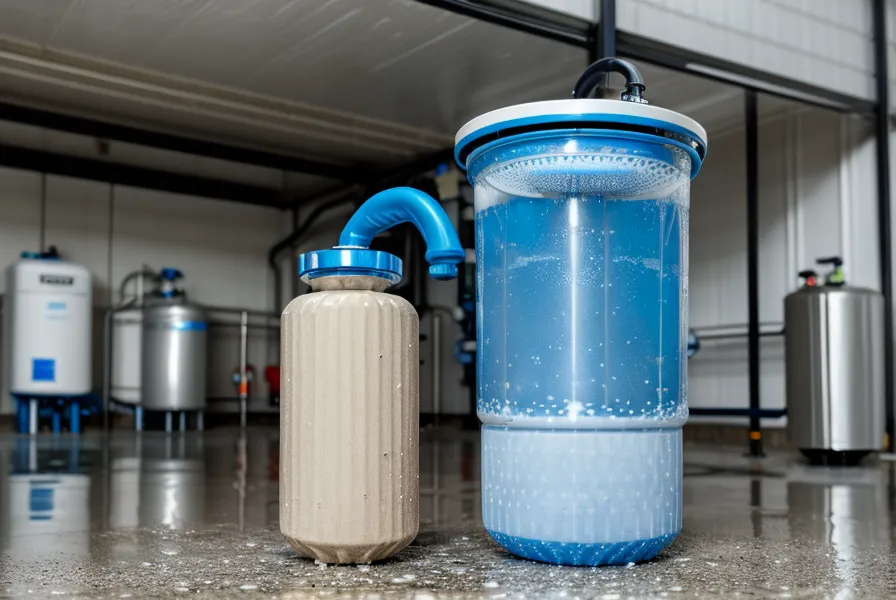
Both units sat in my garage through the worst of it, the kind of heat that turns a closed car into an oven and isn't much kinder to plastic housings (or to a spouse who still thinks two filters is one too many). Craig, a guy I met through a Houston-area prep group after he commented on one of my posts about storage containers, is the type who'll flat-out admit when a piece of his own gear didn't hold up, no spin attached. He'd warned me that cheap hose fittings are usually the first thing to fail, so that's exactly where I looked first.
The gaskets and housing on David's Shield held up well — the plastic wasn't brittle, and every connection was still tight. It's the kind of build quality you'd expect from something meant to be a permanent part of your home setup, similar to what I found testing the Aqua Tower. The Dark Reset was still functional, but you could feel exactly where the "budget" in "budget pick" came from: the hose had gone a little thinner, and the clips felt more likely to snap under stress. Fine for a backpack. Less fine as your only backup plan. On a related note, I also opened a stored water footer-a116d1 I hadn't touched in a while during this same check, half-expecting something off; instead there was just a clean, faint cold smell and nothing that read as plastic or stale, which told me more about that footer-a116d1 than any spec sheet could. If you're trying to figure out how much total storage capacity you actually need before you even start comparing filters, I laid out the math in SmartWaterBox vs Aqua Tower — it also gets into vertical footprint, which matters more than people expect in a two-car garage.
Where Each Filter Actually Earns Its Spot
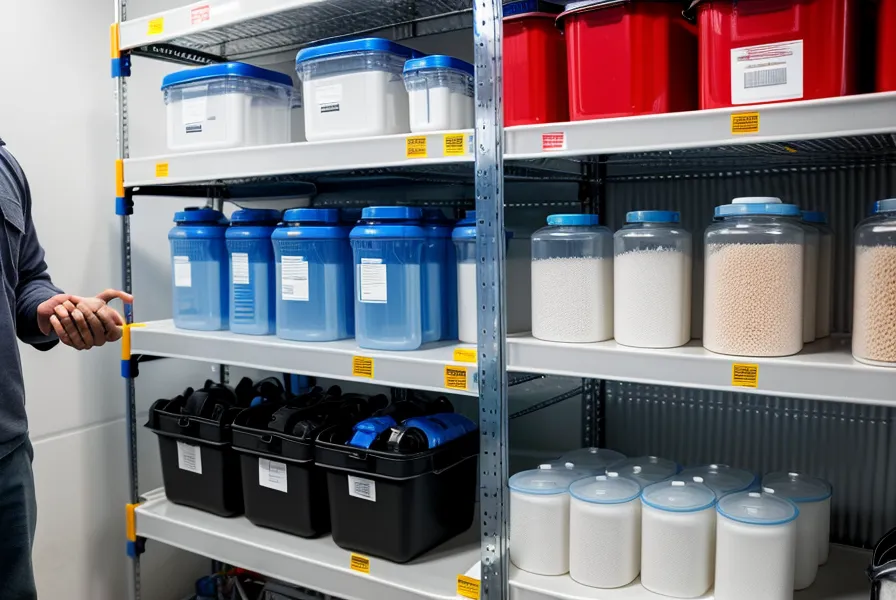
Emergency prep isn't about owning every gadget on the market — it's about building a tiered system where each piece has one clear job. In my setup, SmartWaterBox is the primary supply, the big storage I trust as clean water sitting in reserve. If that runs low or gets compromised, I need a filter I can grab without thinking twice, and that's the role David's Shield fills. I go into the full tiered approach, including where portable options fit next to bulk storage, in The IT Guide to Not Dying of Thirst.
Stress runs high during an actual outage, and a forty-minute wait for a clean glass of water is a real problem when it's your kid doing the asking. That's why the Shield stays on the house shelf despite needing an occasional back-flush. The Dark Reset, meanwhile, lives in my car's emergency kit now, and that's genuinely the better home for it — small, light, built for a portable, grab-and-go supply rather than sustaining a household through a multi-day event. My neighbor Preethi, who moved here from Austin and showed up at my garage after a thread on the neighborhood app pointed her toward "the water guy," is exactly the kind of person who benefits from thinking about it this way. She plans purchases months out and wants to understand the whole system before she commits to any single piece of it, and portable-versus-bulk is usually the first fork in that decision tree.
Choose Based on the Job, Not the Spec Sheet
Picking between Dark Reset and David's Shield isn't really about which one wins on paper — it's about matching the tool to where it lives. Choose the Dark Reset when you need something light, cheap enough to risk leaving in a trunk for a year, and good enough for a short-term or portable situation. Choose David's Shield when the filter is your household's main failover and you need it to move real volume fast without turning water collection into a part-time job. For my house, that's the Shield, and it's not close.
Don't wait for the next storm warning to find out which category your filter actually falls into. Test it in your own backyard before you need it, learn how to back-flush it before your hands are shaking, and pick the one that matches the job you're actually asking it to do. You can check current availability of David's Shield here and get it in place before the next system starts spinning up in the Gulf.