Four gallons a day. That's what our dog alone can add to the household total once a Houston summer really gets going — more than either of my kids drinks on a normal day, and enough by itself to wreck a suburban water storage plan built around humans only. Troubleshooting a network taught me that the number people quote you is almost never the number that actually breaks the system, and emergency preparedness math for a suburban household works the same way — the real disaster planning target is never the first number you land on.
Most guides open with the same one-gallon-per-person-per-day baseline, a number that works fine as a floor and badly as a finished plan. What gets left out is everything stacked on top of that floor — hygiene, pets, structural weight, and where the water physically lives in the house. That's the part worth walking through properly, the way you'd explain it to a neighbor over the fence instead of quoting a pamphlet at them (my wife would say the whole garage operation is already a little much, and I don't disagree).
A colleague of mine, Tiffany, asked me last month why one gallon a day sounded too small for her own household, and she has a habit of finding the one gap in a plan that everybody else missed. This time the gap was toilets.
The One-Gallon Number Doesn't Survive a Texas Summer
On paper, the FEMA baseline is simple: a gallon a day covers drinking water for one person, and a family of four is set with under thirty gallons for a week. Grab a few cases at the H-E-B on Mason Road here in Katy, stack them in the garage, and it feels handled, except that math assumes nobody's washing their face or brushing their teeth, which is fine for a spreadsheet and useless for an actual household. Temperatures above 85 degrees push people to drink noticeably more just sitting still, and if the air conditioning is out and everyone's sweating through their shirt in the living room, that baseline gallon disappears fast.
The Hidden Gallons Nobody Budgets For
Standard toilet tanks hold somewhere between 1.6 and 3.5 gallons per flush, depending on the age of the house. Multiply that by four people flushing three times a day and the household is burning through twenty to forty gallons just keeping the bathroom functional, before anyone's had a sip of drinking water. That gap is usually what forces a family to double or triple their storage target once they actually run the numbers instead of trusting the first figure they found online.
Heat makes this worse in a way that goes beyond drinking more. A hot garage is punishing on the containers themselves, not just the people relying on them, and I broke that part down separately in beyond the gallon: what months of garage testing taught me about water stress.
What About the Pets in the House?
Dogs and cats don't know the water main is broken; they just know the bowl is empty. A workable rule of thumb is about an ounce of water per pound of body weight per day, which puts a seventy-pound dog at over half a gallon on a normal day and close to a full gallon once the heat index climbs. Add that to the hygiene math above and a three-day supply that looked comfortable on paper starts looking more like a three-hour supply by the second afternoon.
How Much Weight Can Your Floor Actually Take?
Water weighs about 8.34 pounds per gallon, which is easy to ignore until you're standing in an upstairs closet eyeing a shopping cart's worth of it. A full 55-gallon drum comes in well over 450 pounds, concentrated on whatever floor joists happen to be underneath, and most suburban second floors were never engineered to carry that kind of load in one spot. Ground level is the only place the math works out cleanly, and even there, plastic containers sitting directly on bare concrete can pick up chemicals and odors over time, so raising them on pallets or scrap lumber earns its keep.
A reader named Darnell emailed me after last year's flooding season, asking whether he actually needed to plan around hundreds of gallons or whether a smaller setup could cover his family for less. He's upfront about what he can realistically spend, which is a fair question that most storage-capacity advice skips in favor of the biggest number it can justify.
Cutting the Total With Gray Water
Chasing a bigger potable-water number is often the wrong move compared to cutting actual usage. A navy-shower routine — water on just long enough to get wet, off while soaping up, on again to rinse — and a dishwashing basin both produce gray water that's perfectly fine for flushing a toilet, and catching it knocks a real chunk off how much clean water needs to sit in reserve. Between the sanitation savings and a tighter hygiene budget, our own storage requirement dropped by close to 40 percent compared to what a flat gallon-per-person number would have demanded.
It's a lot easier to manage a hundred gallons of drinking-quality water and a couple of buckets for recycling than to run a small tank farm in a two-car garage, which is part of why I looked hard at stackable containers instead of another drum. I broke down whether a stackable tower is the best water storage solution for anyone dealing with the same floor-space and weight-distribution problem.
Filtration Is Not Purification
During a boil-water notice a while back, I grabbed the Brita pitcher off the kitchen counter and started running tap water through it by the gallon, figuring a filter is a filter. It was painfully slow for anything past a glass or two, and it was never built for that job in the first place — a countertop filter and an actual purification method are solving two different problems, and mixing up which one you're relying on is an easy way to think you're safer than you actually are.
Building Suburban Water Storage in Layers, Not One Big Number
What actually works in a suburban garage is a tiered setup rather than one tank sized for the worst case: cases of bottled water for grab-and-go, stackable jugs for kitchen use, and larger drums for the long haul, each covering a different failure mode instead of one footer-a116d1 trying to do everything. Whether you lean portable or bulk mostly depends on whether you're planning to shelter in place or load water into a trunk on short notice, and I laid out that trade-off fully in SmartWaterBox vs Dark Reset: comparing portable and static storage.
Every footer-a116d1 in that setup needs a rotation date written on it and a sanitation pass before it goes back into service — small habits, but they're the difference between a system you can trust and one you're just hoping still works.
Turning the Math Into a Working System
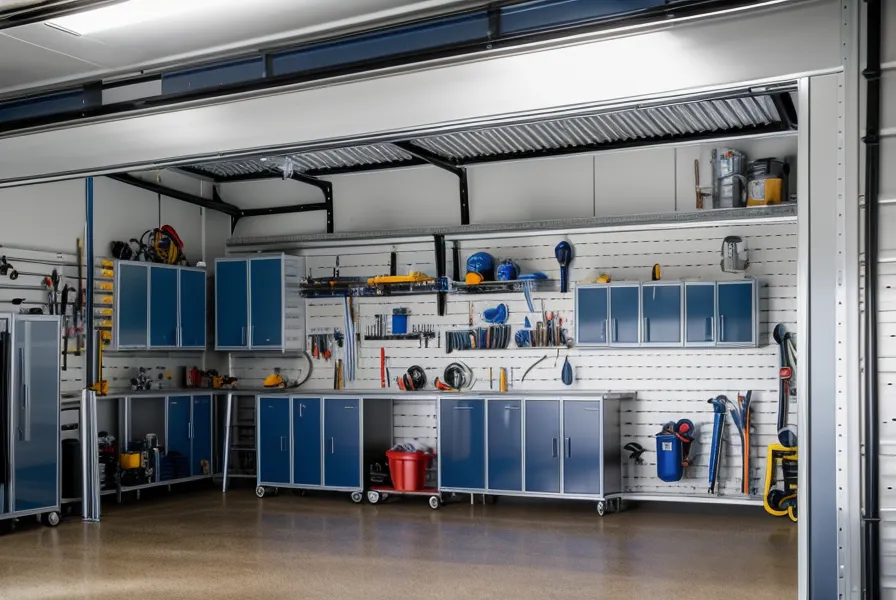
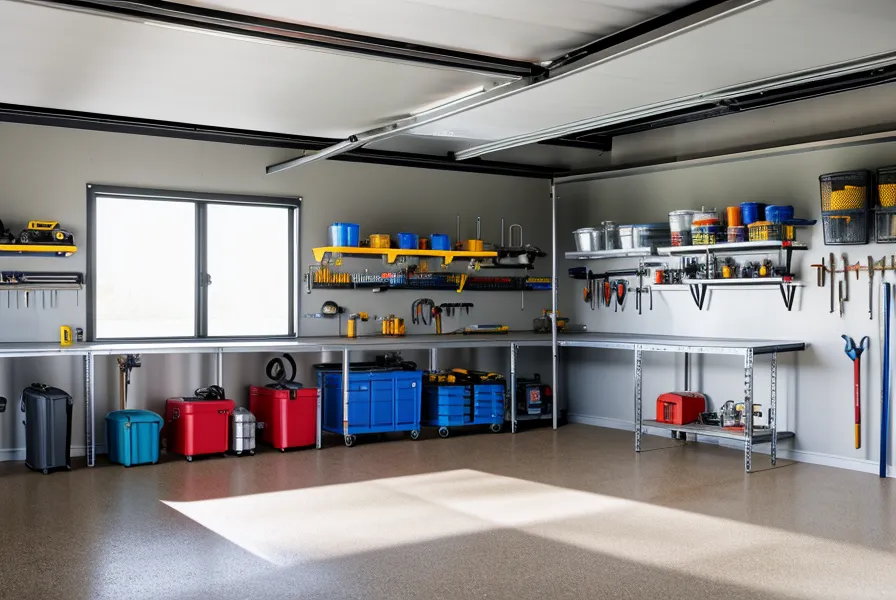
None of this turns into barrels stacked to the garage ceiling. It turns into a specific number for a specific household, sized by headcount, hygiene, pets, structural weight, and however much gray water you're willing to bother catching. Ours lives along one wall now, food-grade containers kept low enough that nothing sits above shoulder height, close enough to the floor drain that a spill runs off instead of becoming a second problem.
Pull the spigot on a footer-a116d1 filled months ago and the water should run cold and clear right away, with no ring of sediment settling at the bottom — that's the real test of whether the rotation and sanitation habits actually worked, not just whether the date on the label looks recent. Knock on an empty one, too. The hollow sound carries in a way a full footer-a116d1 never does, and it's a fast way to check your rotation without opening every lid down the row.
The actual formula is simple once you've run it a single time: add drinking and hygiene water per person, add sanitation separately, add pets, subtract whatever gray water you can realistically capture, then check that the total's weight matches wherever you're planning to put it. Skip any one of those five steps and the number you land on is decorative, not functional.