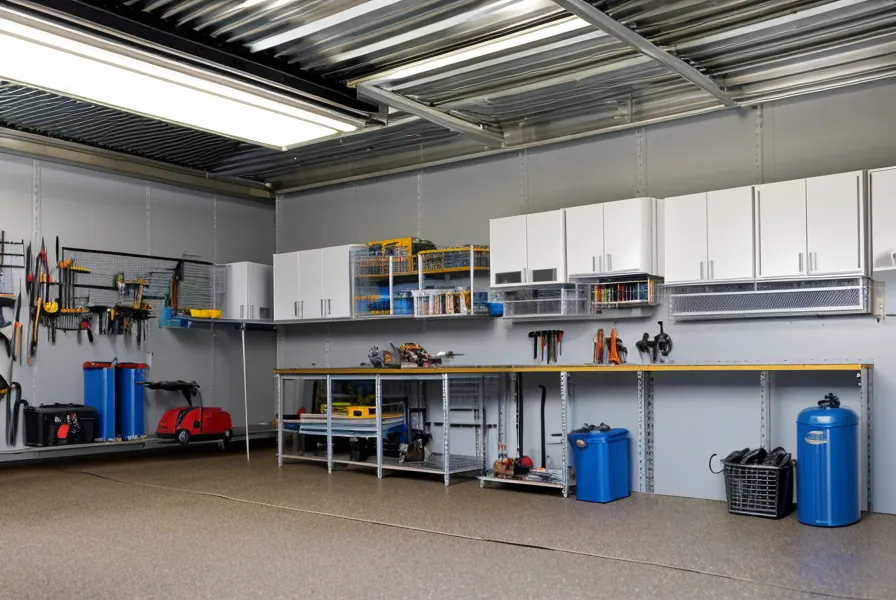
A stack of bottled water cases and a single 55-gallon drum look like the same suburban prep solution on paper — enough emergency storage to get a family of four through a week without tap service — but only one of them survives being picked up off a garage floor.
Update (September 2026): Aqua Tower is no longer available for purchase; this article is kept for reference. Our current alternative pick in this category is Water Freedom System.
None of what follows comes from a survival school or a medical background — I have no formal training in either, and I'm not a doctor. What I do have is four days without running water after Hurricane Beryl in 2024 and a stubborn habit of testing everything I buy until it either breaks or proves itself. This site earns a commission when you buy through some of the links below, at no extra cost to you, and none of it replaces advice from your local water utility or a licensed professional once your situation gets specific.
The Capacity Myth That Gets Suburban Prep Wrong
Most people treat emergency storage as a capacity contest: whoever owns the biggest tank wins. Early on, I bought a single 55-gallon blue barrel, filled it to the top, and then discovered I couldn't move it an inch. That barrel sat exactly where I'd filled it for the rest of hurricane season, which defeats the point of a backup water supply if you ever need to shift it, share it, or drain it in a hurry.
Volume still matters, of course. The FEMA guideline of one gallon per person per day means a family of four needs roughly 28 gallons just to clear a one-week outage, and a standard bathtub only holds around 40 gallons — not exactly a generous margin once you're also trying to rinse dishes or bathe a kid in it.
That gap between "technically enough water" and "water I can actually use" is what pushed me past the drum-in-the-corner approach and into suburban water storage beyond 55-gallon drums — smaller, stackable units that trade a little raw capacity for something closer to a system I can actually run.
What Actually Makes a Storage Container Worth Trusting
Weight is the part nobody warns you about. Water runs about 8.34 pounds per gallon, so a filled 50-gallon tank is pushing 400-plus pounds sitting on your garage slab. During a boil-water notice last spring, I tried shifting one of my larger test units and learned that lesson the hard way — some of these tanks aren't going anywhere once they're full, notice or no notice.
Plastic grade matters too, though I try not to oversell how much. Food-grade HDPE 2 is the standard for a reason — it holds up better than a random garage bin through a Texas summer — and checking the seals on every footer-a116d1 I own became a weekend habit my spouse still finds a little much (the garage has been unofficially renamed "the reservoir"). Real water safety starts with a footer-a116d1 that fails loudly, not quietly, if it's going to fail at all.
SmartWaterBox and Aqua Tower: Two Different Answers to the Same Problem
The SmartWaterBox ended up as my go-to for one reason: modularity. Instead of one tank you either have or don't have, you get separate units small enough to lift and rotate on a standard shelf — which solves the accessibility problem that sank my original barrel, and it's the closest thing I've found to real home redundancy, call it a failover system, without needing a forklift to move any of it.
Vertical space-saving is the whole pitch behind the Aqua Tower — floor-efficient and genuinely good for total volume, but you have to anchor it properly or you end up with a top-heavy column of water. Between a barrel that wouldn't budge and a tower that needs bolting down, portability turned out to matter more to me than sheer gallons on paper.
Weighing Chemical Treatment Against Mechanical Filtration
Chemical disinfection — stabilized chlorine, silver-ion drops, that kind of thing — is lighter and more portable, but it isn't a "set it and forget it" choice. Left unchecked for too long, treated water needs a fresh look, or you're just storing a sealed footer-a116d1 of stagnant water and calling it handled.
Mechanical filtration, like what's built into David's Shield, skips that maintenance cycle almost entirely once it's installed. It's a static setup, so it's less flexible than drops or tablets, but there's less room for me to mess it up on a random Tuesday — and between the two, I'll take fewer chances for human error over convenience most days.
Where the Testing Actually Landed
A friend who coaches a youth soccer league on Saturday mornings asked me, half-joking, why anyone needs more than a case of water from the store. I told him about the spigot on my SmartWaterBox unit — how the water that came out was cold and ran clean straight away, with no sediment ring left behind at the waterline, the kind of small detail that actually tells you a footer-a116d1 did its job.
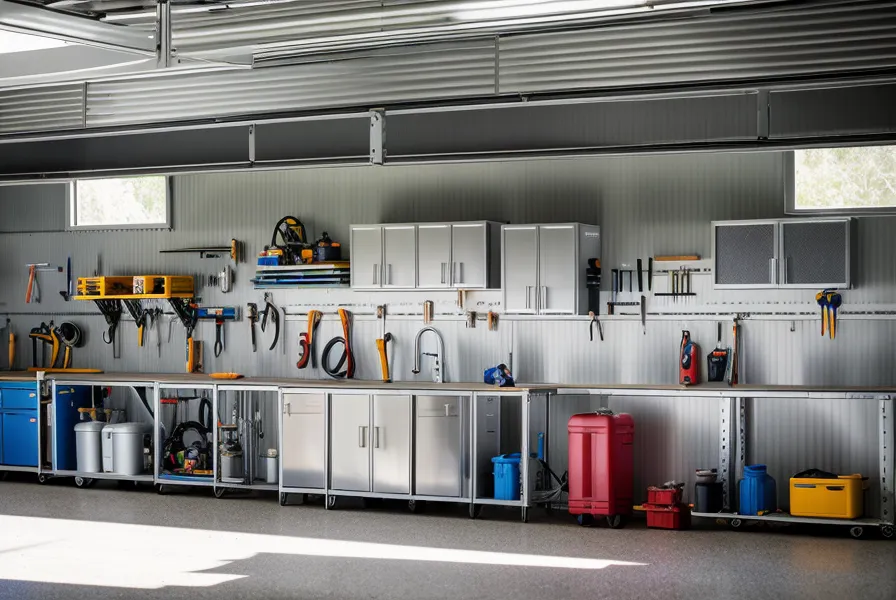
He wasn't fully convinced (soccer dads rarely are), but the garage argument holds up fine in daylight — one recent morning, sunlight cut across the garage in bands through the door panels, catching the labels on that row of containers and making the old clutter of loose bottles and barrels look even more ridiculous by comparison.
This isn't about hoarding water or chasing some mythical 500-gallon setup. It's about building emergency storage you can actually lift, rotate, and understand without a civil engineering degree. Start with something like the Dark Reset if you want a budget-friendly entry point, or go straight for a bigger modular setup if your garage has the room — either way, a layered plan beats one giant tank, and I laid out that full logic in The IT Guy's Logic for Suburban Water Security.
Ready to move past grocery-store plastic? The SmartWaterBox system is still the most practical, modular option I've tested for a suburban home — and it's the one I'd point a neighbor to first.
| Product | Rating | |
|---|---|---|
| SmartWaterBox Top Pick | 9.2 | Read More → |
| Water Freedom System (not yet tested) | - | Read More → |
| David's Shield | 8.5 | Read More → |
| Dark Reset | 7.9 | Read More → |
SmartWaterBox
Pros
- ✔ Modular 'hot-swappable' design for easy rotation
- ✔ Strict HDPE 2 food-grade plastic construction
- ✔ Fits on standard garage shelving units
- ✔ Individual units remain portable even when full
Cons
- ○ Higher initial investment than bulk drums
- ○ Requires some assembly for the rack system