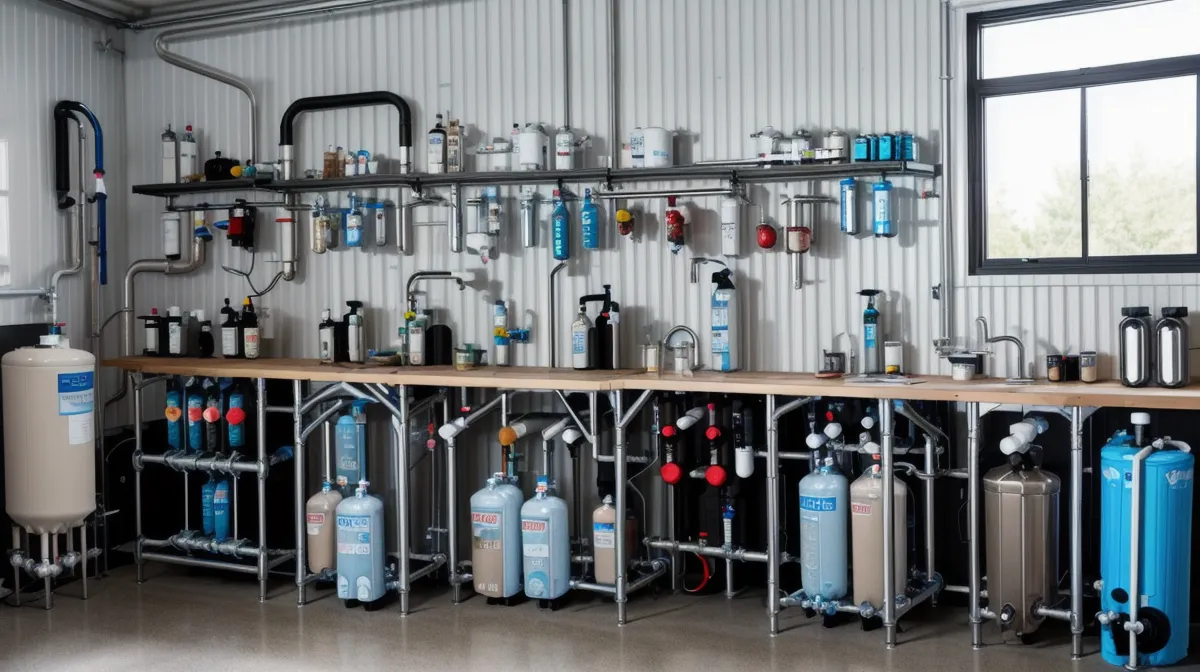
Hold a glass of properly filtered water up to the light in a garage and you should see straight through it: no cloud, no tint, nothing drifting past your fingers on the other side. That's the whole test, and it's the one thing most hurricane prep marketing skips past in favor of gallon counts and spec sheets. Home infrastructure doesn't get simpler than a faucet, and Hurricane Beryl proved mine had zero backup plan for one when it knocked our water out for four days in 2024, which is how half my garage turned into an emergency water testing setup, and how I ended up writing water storage reviews about what actually holds up.
Update (September 2026): Aqua Tower is no longer available for purchase; this article is kept for reference. Our current alternative pick in this category is Water Freedom System.
Before getting into why David's Shield ended up earning a permanent spot on my pegboard rack, here's the disclosure up front: this site runs on affiliate links, and if you buy gear through one, I earn a commission at no extra cost to you. Seven years of testing water systems in a converted two-car garage doesn't make me a licensed anything — just persistent (my spouse would say stubborn). Treat what follows as one household's testing notes, not a substitute for advice from a real water quality professional.
The Myth: More Gallons Always Means More Safety
The myth I keep running into, in comment sections, from neighbors, from my own first attempts, is that safety is a volume problem: stack enough water in the garage and you're covered. I believed it too, at first. My early setup was a mismatched row of containers along one wall of what's now a permanent testing space, and the number printed on the side of each jug felt like the only variable worth tracking.
Then a water main broke a few streets over from George Bush Park here in Katy, and the county issued a boil notice, not a hurricane, just an ordinary break that exposed the same gap a real storm would. Volume wasn't the problem. I had gallons sitting on the shelf and no fast way to make more of it safe to drink once what I'd stored ran low, which is a different failure than simply running out.
Pool-shock purification tablets were my answer that week — the kind sold specifically for emergency kits. The label was blunt about one thing: a 24-hour wait before the water was safe to drink. Twenty-four hours is a long stretch to ask a family to go without water that's already been rationed for a day, and that gap is what pushed me toward filtration instead of chemical treatment. It's easy to blur purification and filtration together in your head, but one treats water you already have on a timer and the other pulls new water through something and hands it back usable on demand; different jobs, not interchangeable stopgaps.
Home Water Infrastructure Fails at the Handoff Points
Home water infrastructure rarely fails all at once; it fails at the handoff points, the moments where a system that works fine in a demo suddenly needs a working outlet, a charged battery, or a level of patience most of the household doesn't have. Every powered pump and UV unit I tested ran fine in my garage with the lights on. None of that told me whether it would still work for my spouse, alone, three days into an outage, without me around to troubleshoot it.
I chased capacity first, the way most people do — the SmartWaterBox and the Aqua Tower both held plenty of water, and neither solved the actual problem. Sizing a household supply starts with the basic per-person daily gallon figure the FEMA guidance quotes, but that number only tells you how much to store, not whether you'll be able to treat any of it once the power's out.
My neighbor Mel is who I test most of this in front of, mostly because he won't take my word for anything; he assumes a product is marketing nonsense until he's personally watched it fail (which, to be fair, several of them have). Standing in the garage while a pump-based filter died mid-cycle, he didn't say much. He didn't have to.
Dark Reset is a genuinely good piece of kit for a backpack or a car door pocket, but asking a unit built for one person to cover a family of four brushing teeth, cooking, and drinking felt like trying to run a household network off a single phone hotspot; technically possible, painfully slow. I wrote more about that particular disappointment in Moving Past the Bottle: Why I Finally Switched to a High-Capacity Home Water System. A portable filter and a full household system are answering two different questions, not competing for the same shelf space.
Why David's Shield Passed Where Others Didn't
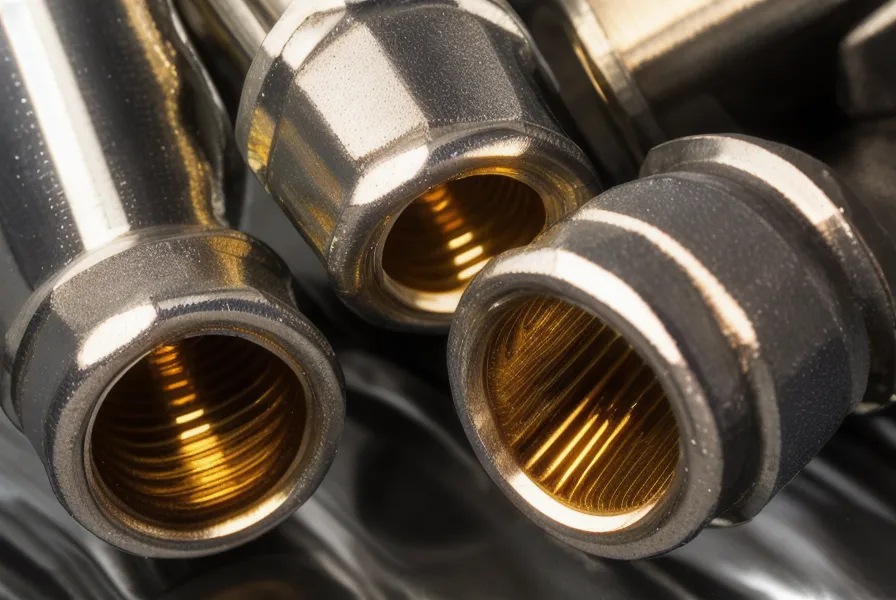
David's Shield is the system that kept working after I cut power to everything else in the test, literally: no cord, no battery, no pump motor to burn out. It runs on gravity and manual pressure, which means more effort per gallon than a powered unit, but zero dependence on the grid staying up, and in a real outage the grid is usually the first thing to go. The fittings lock together with a solid metal snap that told me, before I'd run a drop of water through it, that this wasn't built like the flimsier jugs stacked nearby.
It filters fine enough to catch the waterborne pathogens that actually matter after flooding, and I don't need to recite a spec sheet to trust that once I've watched the output firsthand. That's the part most reviews get backwards; they lead with numbers on a box instead of whether the thing works when nobody's there to babysit it.
Filling the storage containers has become its own small ritual by now: the tap runs, the footer-a116d1 fills, and there's a metallic click when I twist the hose bib shut that's turned into the sound of that job being done for the week.
I ran a batch through the filter and held the glass up out of old IT instinct (always check the output before you trust it) and watched my own hand on the other side of it without a shred of haze getting in the way.
Gravity filters run slower than a pump, and there's a whole separate conversation about flow rate and how many cups you can fill before dinner gets cold, but none of that changes whether the system still works with the power out, which is the only spec that actually mattered to me.
Fitting a Real System Into a Two-Car Garage
Storage capacity planning — how tall to stack, how much floor space to give up, how it looks to a spouse who already thinks the garage has enough going on — is genuinely its own project, separate from whichever filter ends up sitting on top of it. David's Shield has a narrow enough profile that it fits flat against the wall instead of eating the middle of the floor, and the first time my spouse could actually park inside the garage again, that was the real approval. Readers dealing with a smaller footprint might get more out of How to Store Potable Water Long Term in a Small Backyard than anything I can add here.
Going vertical solves a footprint problem in a garage where floor space matters more than height, but a taller stack doesn't change whether the water at the bottom of it is still good to drink down the road — that's a rotation schedule's job, a separate habit plenty of people skip until they're the one opening a footer-a116d1 that's been sitting untouched too long. None of it matters anyway if the containers weren't sanitized properly before that first fill, a protocol of its own that has nothing to do with which filter sits next to it on the shelf. Chemical treatment drops solve a related but different problem, and they carry their own shelf-life clock to track separately from anything mechanical — one more reason I lean toward a system I don't have to double-check against an expiration date.
The SmartWaterBox is still the better call if you've got extra square footage and want maximum standing capacity — David's Shield just felt like the more balanced choice for a standard two-car garage, mine included.
The Rule I Give Every Neighbor Who Asks
A neighbor named Sandra Kwan messaged me a while back after spotting my prep notes shared on the neighborhood app, asking for whichever option took the least effort to set up and still genuinely worked — not the biggest, not the cheapest, just the one that wouldn't let her down three days into an outage. That's the real question hiding underneath the gallon-count myth, and it deserves a straight answer instead of another spec sheet.
So here's the correction, stated plainly: don't shop for an emergency water system by capacity first. Shop by whether it runs without the grid, whether anyone in the house — not just whoever set it up in the first place — can operate it under stress, and only then by how many gallons it holds. David's Shield passed all three for my household; a bigger box that only I knew how to run would have passed none of them. It isn't the cheapest option in the driveway, but you aren't really paying for plastic and fittings — you're paying for a system anyone in the family can turn on and trust without needing me to walk them through it. If your household is smaller or your main concern is a car kit rather than a whole house, Dark Reset is still the better fit — light, simple, and honest about what it's for.
If the gallon count on the side of a jug is the only thing guiding your emergency water plan, that's the piece worth fixing before hurricane season catches you mid-setup. Test whatever you buy before you need it, make sure someone other than you can run it, and get the system in place now instead of during the next watch-and-warning cycle.
David's Shield
Pros
- ✔ Reliable passive filtration with no power required
- ✔ Professional-grade quick-connect fittings
- ✔ Space-efficient footprint for suburban garages
- ✔ 0.1 micron filtration for 99.9999% pathogen removal
Cons
- ○ Higher initial investment than basic jugs
- ○ Requires manual effort for high-volume filtration