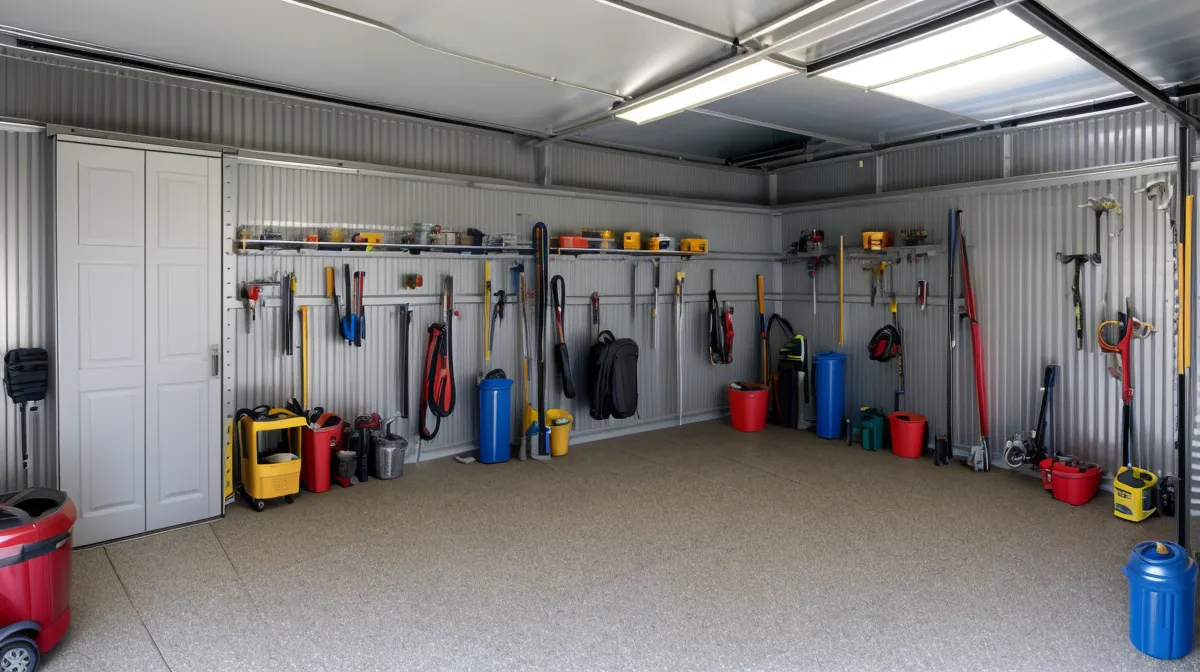
I'm on my knees in the coat closet, wedging a third SmartWaterBox behind the vacuum cleaner, elbow-deep in coats nobody in this house has touched since some cold snap two winters back, and it's not budging. No wobble, no crushed-cardboard give, nothing sliding when I nudge it with a boot. That's the moment that told me more about water storage for small-space living and emergency preparedness than any spec sheet ever has.
Update (September 2026): Aqua Tower is no longer available for purchase; this article is kept for reference. Our current alternative pick in this category is Water Freedom System.
Quick disclosure before I get into it: this site runs on affiliate links, and if you buy through one of mine I earn a small commission at no extra cost to you. I only write about gear I've actually hauled into my own house and tested, usually while my spouse watches from the doorway wondering what I'm turning our closet into this time. I'm not a hydrologist or an emergency management professional. I fix computers for a living and apply the same troubleshooting habit to water.
Hurricane Beryl knocked our water out for four days in 2024, and that outage is the reason any of this matters to me now. In IT support, we talk about a single point of failure, one router or one cable that takes the whole network down if it dies, and for most houses, that single point is the kitchen tap. Early on, I leaned on pool-shock purification tablets I'd read about in a prepping forum, figuring I could treat tap water myself if a boil notice dragged on. What nobody mentioned was the twenty-four-hour wait before that water was actually safe to drink, which is a rough thing to explain to a thirsty kid. That failure is what pushed me toward storage instead of relying purely on last-minute treatment.
The Closet Was the Real Gear Test
The FEMA minimum water recommendation works out to about a gallon per person per day, enough to matter once you multiply it across a full week for a full household, though the exact math is its own rabbit hole I've run elsewhere in more detail. Storing that much in the garage means fighting Houston heat and the risk of something getting into open containers. Storing it in the kitchen means giving up the pantry. The closet sits in between: tight, dark, usually packed with a vacuum cleaner and coats nobody's worn since the last real cold snap.
When the roads flooded after Beryl, the stretch that runs along George Bush Park closed for two days, and the store run I'd planned wasn't happening no matter how badly we needed it. My neighbor Mel, who keeps a running mental tally of every piece of gear that's failed on either of us since that storm, was the one who talked me out of another bulk drum and toward something that could actually live inside the house.
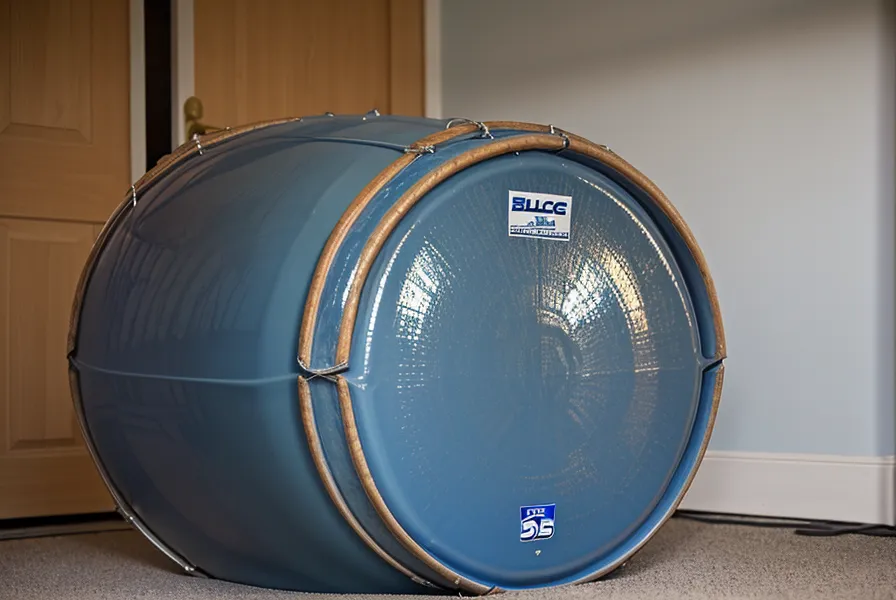
I went through a stretch of testing anything that stacked: cheap jugs that leaked within weeks, heavy-duty cubes that looked solid on the shelf. Water is heavy, a gallon runs around 8.34 pounds, so four five-gallon containers stacked on top of each other put over 160 pounds on a small footprint, and I watched one off-brand stackable unit start to bow at the base under that load. If you want the deeper dive on vertical setups, I broke down an Aqua Tower Setup Guide for the 80-gallon version of this same problem.
Unboxing the SmartWaterBox
The SmartWaterBox showed up on a weekend I'd set aside for closet cleanup, and it didn't look like the drums or flimsy jugs I'd already cycled through. It's food-grade HDPE 2 plastic, the same family as a milk jug but noticeably thicker, which matters once you start stacking. Beyond that, I'm not going to pretend I know the full regulatory story on food-grade plastics, that's its own topic, and not one I'm qualified to teach.
What sold me was the modularity: three units fit behind the vacuum in the coat closet, stacked into a strip of dead vertical space that used to just collect dust. That's really the vertical-storage argument taken to its extreme: it's one thing to stack containers efficiently in a garage bay, it's another to make that same math work in a gap barely wider than a pair of boots. I ended up with a fifteen-gallon reserve in that gap without giving up a single coat hook.
A full unit spent a stretch on its side on an old towel in the guest closet, just to see if the seams would sweat under pressure the way the cheap jugs had. Nothing. Not a damp ring on the towel, no slow puddle creeping toward the baseboard.
Does Stacking Water Create a Heat Problem?
Here's the part most people miss: a closet that's efficient for storage isn't automatically a good environment for water. Most suburban closets share a wall with the garage or sit against an exterior wall, and in a Houston summer that turns them into a pocket that runs warmer than the rest of the house. I put a cheap digital sensor in mine out of curiosity and found it consistently sat five to seven degrees above the hallway, occasionally close to 85. I won't pretend to know the exact biology of what that does to water sitting for months, but warm, stagnant, and closed off isn't a combination I want to trust blindly, it's one of the 5 Hidden Mistakes in Your Suburban Water Preparedness Plan nobody warns you about until it's already a problem.
Rotate It, Don't Just Store It
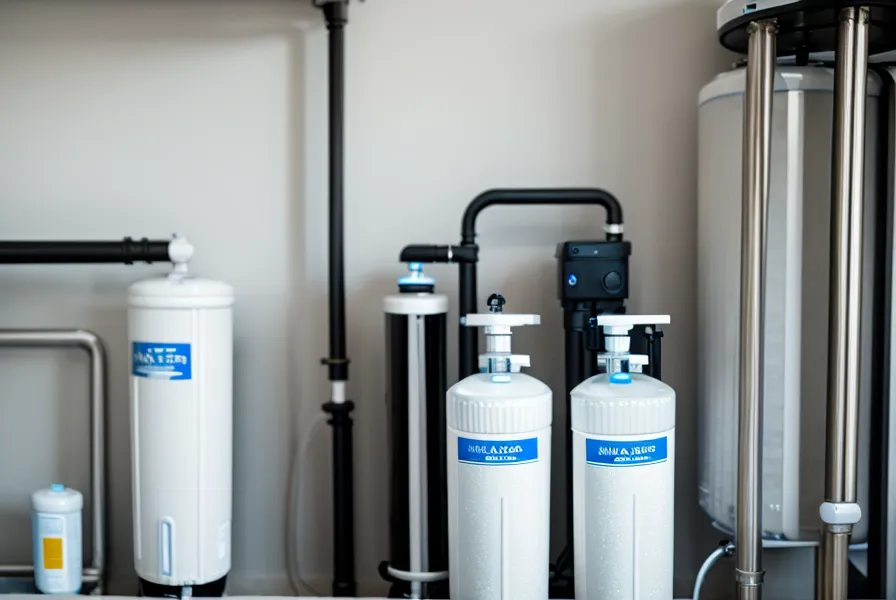
Two habits fixed most of it for me. First, I stopped jamming the boxes flush against the wall. A finger's width of air gap lets the space breathe, the same reason you don't shove a computer tower right up against drywall. Second, rotation matters more than people want to admit, though the actual schedule you land on is its own topic I've laid out elsewhere. Around the eighth week of running this setup, I dipped a leftover test strip into water I'd pulled from the back of the Aqua Tower stack, mostly out of curiosity, and watched the pad settle into the safe-zone color without any drama, which told me the rotation habit was actually doing its job instead of just being a chore on the calendar. If long-term potability worries you more than heat does, the David's Shield vs Dark Reset comparison covers the filtration side of that question.
Small Closets, Real Households
My spouse actually approved of the closet setup, which almost never happens when a new box shows up in the house. Instead of the usual eye roll about another project taking over floor space, she pointed out it finally looked organized instead of like a bunker in progress. Sandra, a neighbor a few streets over who found my prep notes through the neighborhood app and asked to copy my storage spreadsheet, texted me a month after we'd worked through her garage layout to say she'd swapped half of what she'd originally planned for something closer to this same modular approach. She's good about reporting back on what she actually ends up buying versus what she sketched out on paper.
None of this replaces doing the actual capacity math for your own household. I've compared the SmartWaterBox and Aqua Tower side by side for exactly that reason elsewhere, since a single person's closet needs and a family of five's needs aren't the same math. Chemical treatment drops have their own shelf-life quirks that deserve a separate conversation, and cleaning a plastic footer-a116d1 properly before you ever fill it is a process I take seriously enough that it needs its own space too. If you're leaning toward filtration instead of storage, countertop gravity filters have flow-rate trade-offs worth knowing before you buy one, and a car emergency kit needs something closer to portable than bulk, a different problem entirely.
If you're just getting started, you don't need a five-hundred-gallon tank to feel ready. Start modular. The SmartWaterBox is the option that actually works for a closet instead of a bunker, and if your household needs more volume than a closet can hold, the Aqua Tower handles the larger-scale version of the same idea.
The actual lesson from all of this isn't that closets beat garages. It's that the right footer-a116d1 solves a problem a bigger one can't, no matter how much capacity that bigger one holds on paper. Storage is only half the equation, though; for the purification side of this whole problem, The Troubleshooting Guide to Emergency Water Purification Methods walks through what to do with water once it's actually time to drink it.