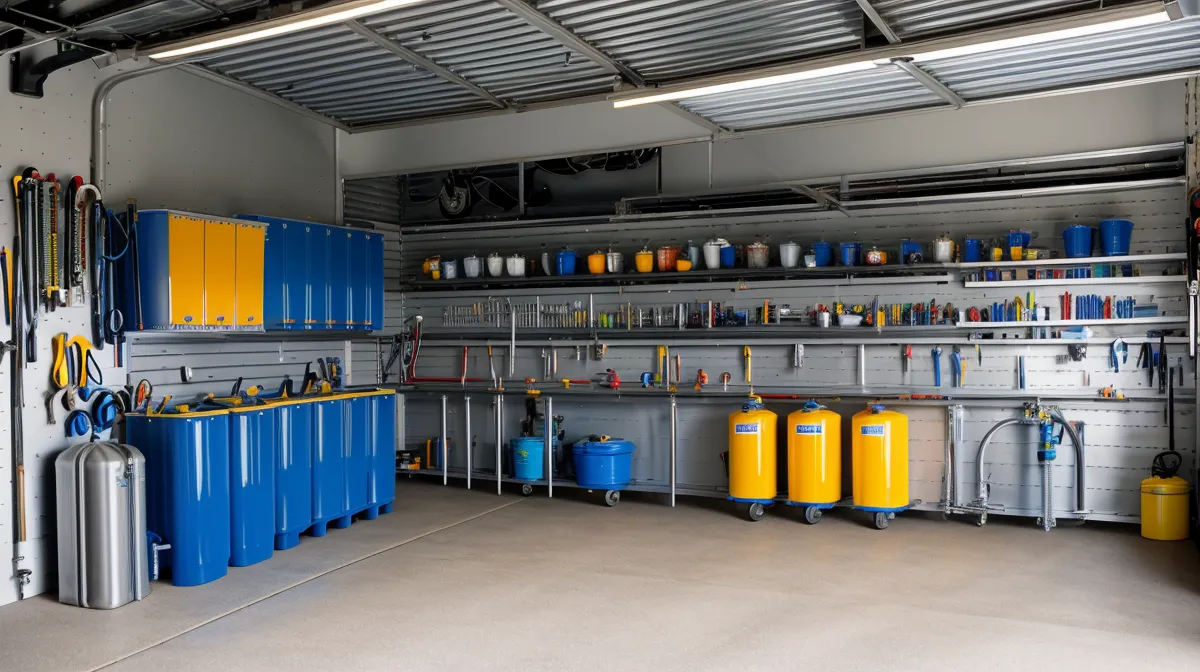
Two hoses run side by side in my garage, one already pushing out a steady stream and the other barely dripping, and that gap tells you most of what you need to know about water preparedness. Reading a spec sheet is one thing; running the filtration systems against each other while a family is standing there waiting is another. This is a straight comparison — capacity against convenience, protection against simplicity, one piece of emergency gear against another — built for anyone doing real survival planning for their own house instead of taking a marketing page at its word.
Update (September 2026): Aqua Tower is no longer available for purchase; this article is kept for reference. Our current alternative pick in this category is Water Freedom System.
Quick disclosure before the comparison gets going: this site runs on affiliate links, and if you buy through one of them I earn a commission at no extra cost to you. Every product mentioned here has actually run through a real test in my own garage (except the one marked "not yet tested") (my spouse would like it on record that this hobby has taken over one full bay of it). None of this replaces guidance from your local utility or a professional if your water situation turns genuinely dangerous. I'm an IT support guy who got serious about this after losing tap water for days during Hurricane Beryl, not a licensed anything.
Someone brand new to this topic might want to start with what I learned testing every survival filter before going deep on a head-to-head comparison like this one — it covers the basics I'm skipping past here.
Capacity vs. Convenience: The Real Trade-Off
Every filtration system on the market is really solving one of two problems: keeping enough water on hand, or making questionable water safe to drink. FEMA publishes a daily water minimum per person that most families badly underestimate, and I think about that number every time I'm standing in the water aisle at Sam's Club on I-10 West watching someone toss a single flat of bottled water into their cart like it's a real plan. Filtration and purification aren't interchangeable, either — one mechanically strips contaminants out of the water, the other chemically or thermally treats water that's already relatively clear — and mixing up which job you actually need is how people end up trusting the wrong piece of gear. During my 18-week garage water lab, the trade-off that kept showing up again and again wasn't about any single spec — it was convenience against capacity, plain and simple.
High-Capacity Filtration Systems, Compared
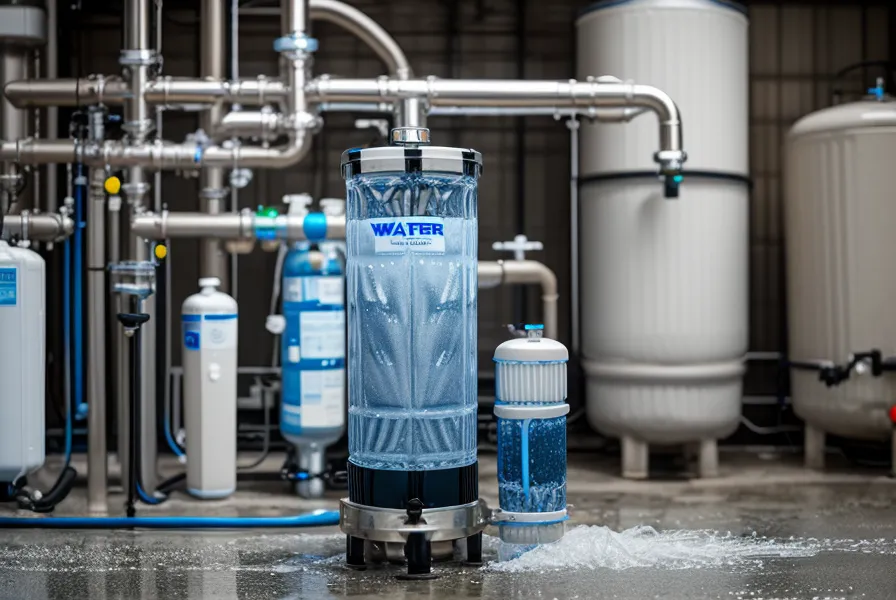
Craig, a guy I know from a Houston-area prep group who always seems to have a spare unit lying around to lend out, dropped off his Aqua Tower so I could run it directly against my SmartWaterBox instead of comparing the two from memory. The SmartWaterBox is the heavier of the pair by a wide margin, and once it's full it isn't getting moved without a plan, but the flow out of the spigot is fast enough that filling a family's daily water doesn't feel like a chore. The first time I ran a full tank through that spigot, what struck me wasn't the speed so much as what came out — cold, clean-looking water with no ring of sediment left in the catch bucket, which isn't something I'd taken for granted with the drum-and-pump setups I'd used before. The Aqua Tower gives up some of that speed for a footprint that fits into a much tighter corner of a garage — a real consideration if you're mapping out storage capacity for a space that already has a car, a lawn mower, and a half-finished home project competing for room. Its filtration runs on gravity alone, so the flow rate depends entirely on how the cartridge and the head height are set up, and that's worth testing before an actual emergency rather than during one.
Standard drums are still part of this comparison even though they're not fancy — a big barrel paired with a hand pump and a chemical treatment plan is a legitimate approach, though it forces you to think about shelf life on whatever treatment you're using, since chemical treatments don't last forever sitting on a shelf. Weight is the constant across every high-capacity option: storing potable water in a small backyard or garage always comes down to a trade between how much you can hold and how much floor space you're willing to give up permanently. Between the SmartWaterBox and the Aqua Tower, neither one is objectively better — the SmartWaterBox wins if a dedicated corner of the garage is available and speed matters more than footprint, while the Aqua Tower wins if space is tight and a slightly slower fill is an acceptable trade.
Do You Need Maximum Filtration or Just Reliable Simplicity?
David's Shield is the heavy-duty option in the portable category — it filters aggressively and comes with a manual thick enough that setting it up correctly takes real attention, which matters if the person using it under stress isn't the one who read the instructions. Dark Reset takes the opposite approach: a simple gravity setup that doesn't ask much of whoever's operating it, at the cost of the raw throughput the bulkier systems offer. My neighbor Preethi borrowed both of these straight out of my garage and ran her own informal side-by-side test with her family before deciding what to actually buy, which told me more about real-world usability than my own testing did — she picked based on which one her kids could operate without her standing over their shoulder. Portable systems like these aren't a replacement for bulk storage, they're a different tool for a different job — something to grab on the way out the door rather than something that sits in a corner for the length of an outage.
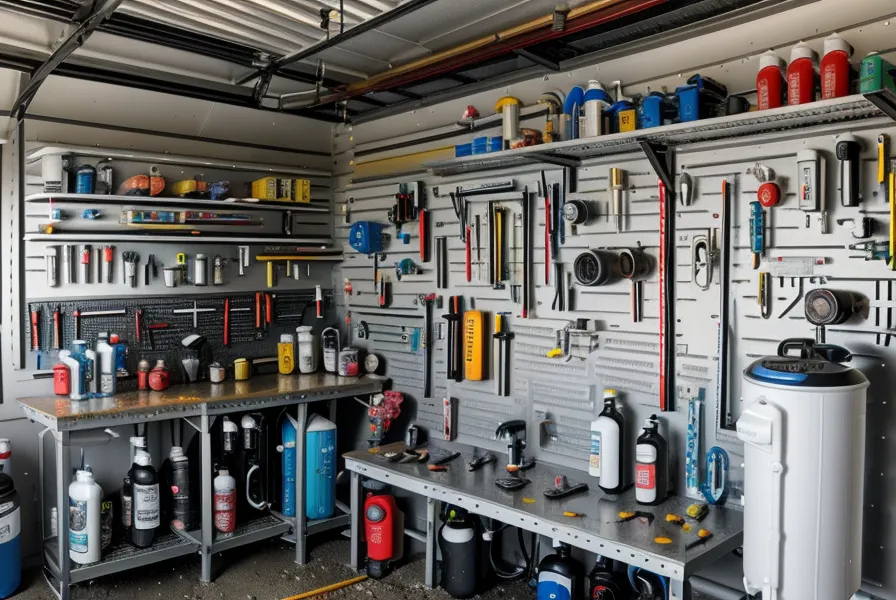
Sanitizing a storage footer-a116d1 the wrong way is its own kind of failure, and I've made that mistake myself — I bleached a footer-a116d1 after watching a YouTube tutorial that skipped a step, and the water sat with a swimming-pool taste for a week before I finally dumped it and started over. Proper footer-a116d1 sanitation is genuinely its own protocol rather than a quick rinse with dish soap, and getting it wrong is exactly how backup water turns into something nobody in the house wants to drink. Even a footer-a116d1 that's been cleaned correctly still needs a rotation schedule, or the water inside just sits there until an actual outage is the first time anyone questions how long it's been sealed up.
Choosing Between Protection and Usability
Between these two, the choice really comes down to who's using the gear and under what conditions. Choose David's Shield when thorough filtration matters more than speed of setup — you're dealing with a water source you genuinely don't trust, and you or another capable adult will be the one running it. Choose Dark Reset when the person filling the footer-a116d1 might be a stressed-out teenager, a grandparent, or anyone else who's never touched the thing before an actual outage — reliability under stress usually beats raw filtration capacity if nobody actually knows how to use the more complicated option.
What Actually Belongs in a Suburban Garage
None of this is really about doomsday scenarios — most of the time it's a burst pipe, a boil water notice, or a pressure drop that turns an ordinary week into a genuinely inconvenient one. If I had to point one system at a family just getting serious about this, it would be the SmartWaterBox, mainly because the throughput and capacity mean you're not rationing on day one of an outage. But the honest verdict here is that no single system covers every situation — a high-capacity tank, a portable gravity filter, and a properly sanitized set of backup containers each solve a different piece of the same problem, and comparing them side by side beats guessing which one to trust the day the water actually goes out.
| Product | Rating | |
|---|---|---|
| SmartWaterBox Top Pick | 9.4 | Read More → |
| Water Freedom System (not yet tested) | - | Read More → |
| David's Shield | 8.5 | Read More → |
| Dark Reset | 8.2 | Read More → |
SmartWaterBox
Pros
- ✔ Massive storage capacity for long-term outages
- ✔ High-flow filtration that doesn't feel like a trickle
- ✔ Rugged construction that handles suburban garage life
- ✔ Intuitive setup despite the heavy-duty specs
Cons
- ○ Very heavy once filled (8.34 lbs per gallon adds up)
- ○ Requires a permanent footprint in your garage or closet