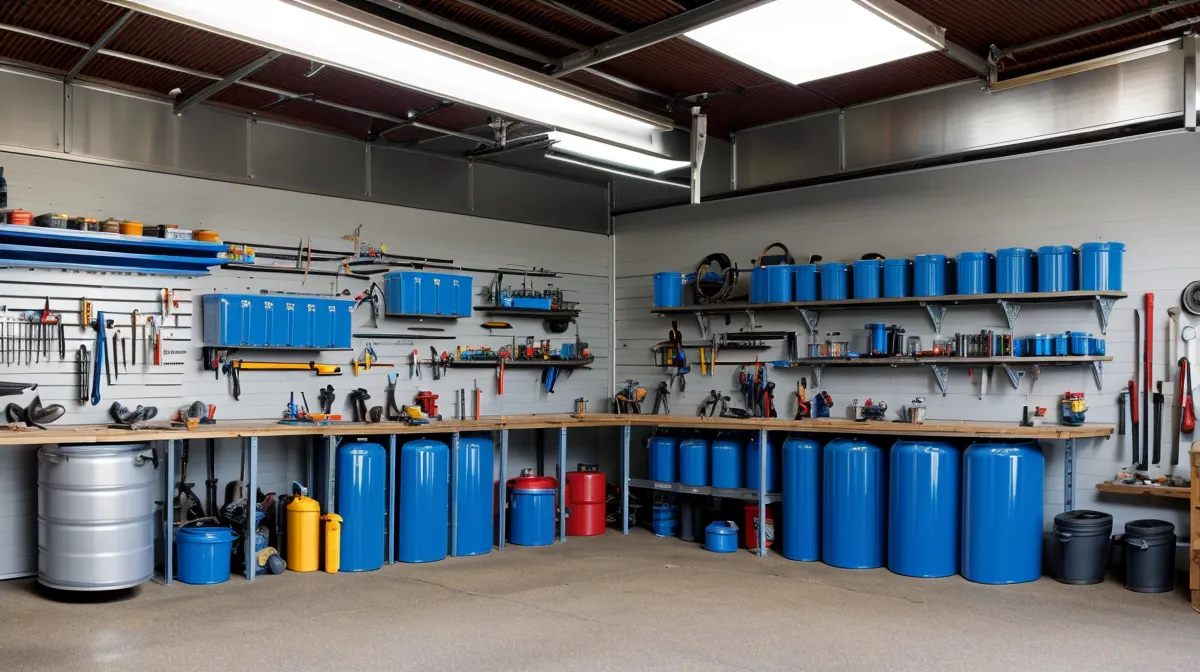
Both hands braced against a fifty-five-gallon blue barrel that had not moved an inch in three days, I ran through the same checklist I use on a dead server at work: is it actually broken, or did I just set it up wrong this time. The barrel was not broken — it was just full. At roughly 8.34 pounds per gallon, fifty-five gallons comes out to something close to four hundred and sixty pounds sitting in one plastic shell with no wheels and no handles. That is the moment gear testing stops being a hobby and starts being an actual engineering problem, and it is the gap between water storage as a shopping list and water storage as emergency prep that actually survives a Houston summer without turning into a headache.
Most guides treat water storage like a single purchase decision — buy the right containers, fill them, done. The actual failure point almost never happens at the first fill. It shows up later, when a footer-a116d1 that looked fine on the shelf turns out to be the wrong shape, the wrong material, or just too heavy to move once emergency prep stops being theoretical. Treat it as a troubleshooting problem instead of a shopping list, and the whole approach changes.
How Much Water Do You Actually Need, and Where Does It Go Wrong?
Every general guide points to the same starting number: plan around a gallon per person, per day, and the FEMA minimum water recommendation treats that as a floor, not a target. Fair enough — but that number does not tell you what it weighs once you multiply it out for a full household through a Houston summer, when a single gallon can disappear before lunch just keeping your body temperature in check. The fifty-five-gallon barrel I mentioned earlier works out to something close to four hundred and sixty pounds sitting in one plastic shell, which is a very different reality than "a gallon a day" makes it sound like.

A neighbor of mine, who coaches a youth soccer league on Saturday mornings, once asked why I had so many containers taking over the garage. Instead of a number, I handed him a full gallon jug and told him to walk it out to his mailbox and back. He got the point before he reached the sidewalk. I ran a longer version of the same test myself, hauling two full jugs out along the Terry Hershey Park trail near the Energy Corridor, and one loop was enough proof that "store as much as you possibly can" is a workout plan, not an emergency plan.
Filtration Versus Purification: Two Different Fixes
People use "filter" and "purify" like they mean the same thing, and that mix-up is where a lot of home setups go sideways. A mechanical filter, like the hollow fiber membrane style built into a lot of gravity systems, physically strains out bacteria and sediment — it does not touch dissolved chemicals, and it is not the same fix as a chemical treatment. Purification works differently: it neutralizes what a physical barrier can't catch, though any chemical treatment sitting on a shelf for a long stretch eventually loses potency, so an old bottle from the laundry room is not the same safety net it was the day you bought it.
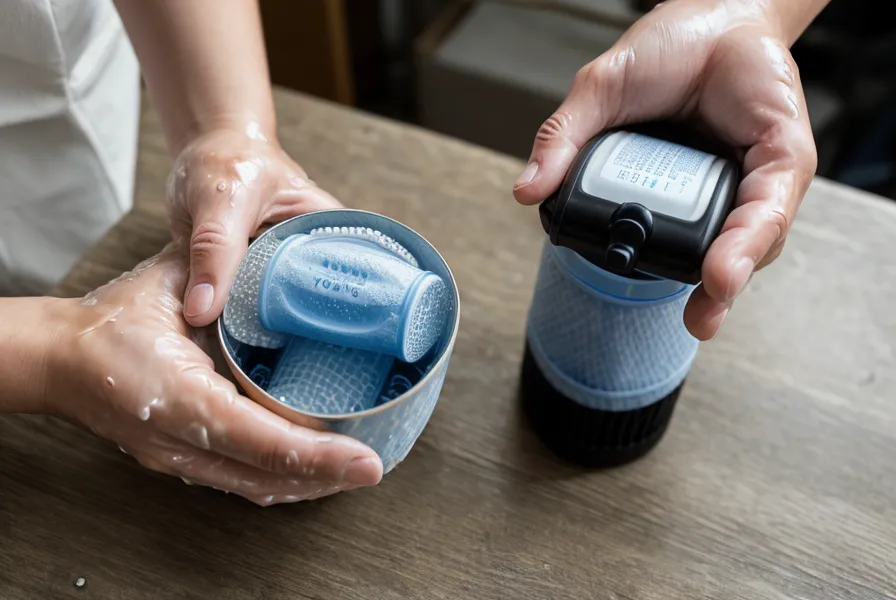
The clearest proof I ever got that a setup was actually pulling its weight came from my dog, who went straight for a full bowl of water I'd run through the Dark Reset setup without so much as a sniff first — the same dog who turns her nose up at anything that smells even faintly off. A dog's nose is a better field test than most of what gets printed on a box, and it's the standard I hold every filter and treatment combination to now.
A Full Barrel Changes Everything About Your Plan
That fifty-five-gallon barrel I mentioned earlier came from thinking bigger automatically meant safer. Filling it was the easy part. There's a small metallic click when you shut a hose bib off after a slow fill, the kind of sound that makes you double-check nothing overflowed. The trouble started when I tried to shift it two feet over so it would stop blocking where I needed to walk. It did not budge. Not a shuffle, not a tilt. Nothing. A four-hundred-and-sixty-pound drum with no handles and no wheels is not furniture you rearrange on a whim; it is a fixed installation, and if you have not picked its final spot before you fill it, you are stuck with wherever gravity put it. That mistake taught me more about storage-capacity planning than any spec sheet ever did: the real question is not how many gallons you can fit, it is whether you can actually reach, rotate, or move any of it once it is full.
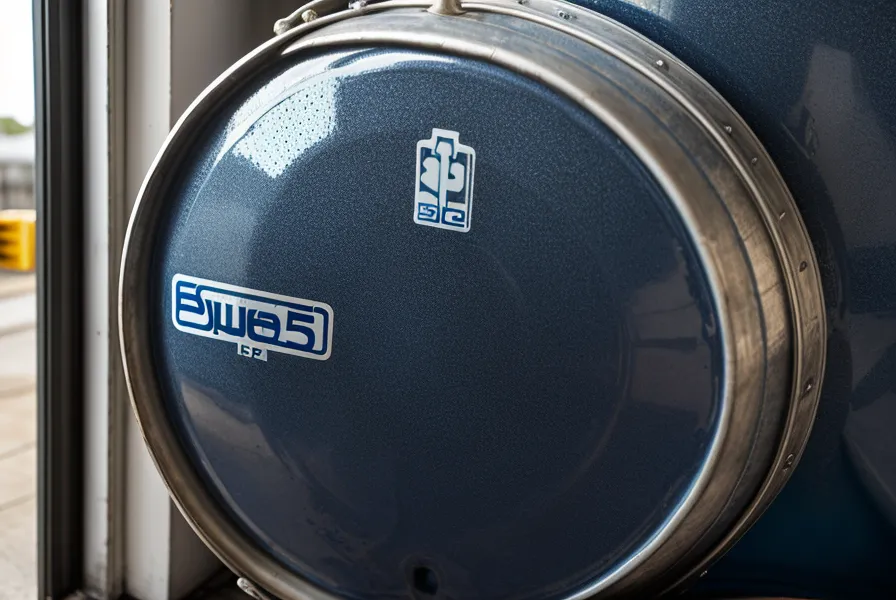
Once a footer-a116d1 that size is in its final spot, the maintenance clock starts whether you think about it or not. A rotation schedule — using and refilling the oldest containers first — keeps the whole system honest instead of letting the back row turn into its own experiment. Sanitizing containers between fills matters more than whatever brand is printed on the side. Going vertical, stacking sealed containers along a wall instead of spreading barrels across open floor, solves the footprint problem but creates a different one, since the taller the stack, the harder it is to reach the bottom layer without turning cleaning day into a full afternoon. Something like setting up a sealed bulk tower for long term suburban water storage handles the vertical half of that trade-off well, provided you plan for access before you stack the first case.
Troubleshoot Your Storage Setup Like a Network Outage
Treat a home water plan the way you would treat a flaky router: isolate one variable at a time instead of guessing at the whole system. Start with capacity. Do you actually have enough for the number of people and days you are planning around, or did you just buy whatever fit in the truck. Then check access. Can you reach every footer-a116d1 without moving the ones in front of it, and can one person actually lift or drain what is in the back. Bulk storage and a portable supply solve two different problems, and treating them as the same thing is its own failure mode: bulk gets a household through a stretch at home, while something small enough to grab on the way out the door is what actually matters if staying is not an option.
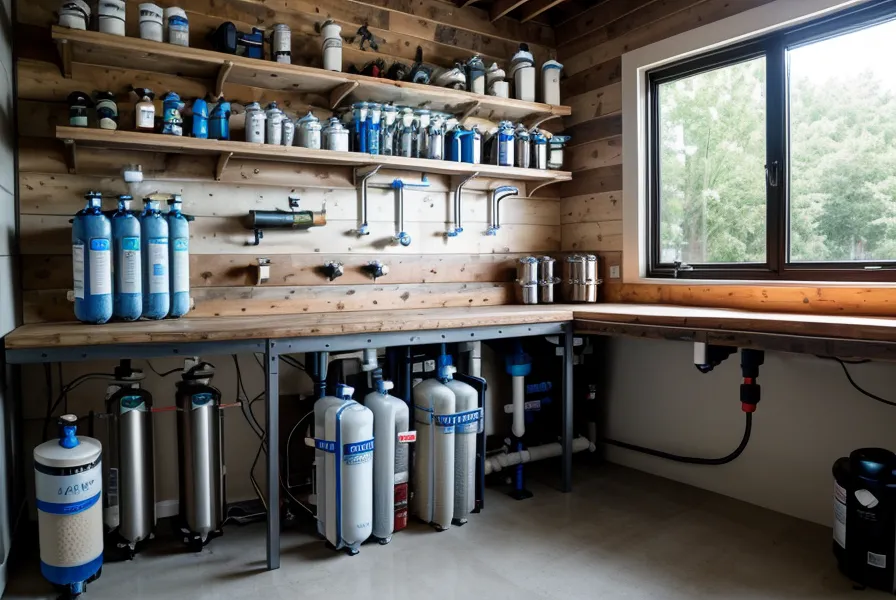
That same instinct is why my David's Shield vs Dark Reset reliability test ended up caring less about the numbers printed on the box and more about whether the output tasted and smelled like nothing at all. The only score that matters when it is your kids drinking it. How fast a gravity filter actually pushes a gallon through under real demand is its own rabbit hole, and it matters a lot more once you are relying on it every day than it does the one time you tested it in a calm kitchen.
A Real Checklist for Suburban Water Storage
After running through enough of these setups, the checklist that actually matters looks less like a shopping list and more like a maintenance log. Rotation matters more than raw volume. Sanitation matters more than the brand printed on the container. Access matters more than how good the stack looks against the wall. None of that replaces basic judgment, and none of it substitutes for checking with your local water authority for area-specific guidance, since water quality and storage advice can vary block to block even within the same city.
Water prep, at its core, is not a single purchase or a single fix. It works more like running a small utility out of your own garage — something that needs occasional attention, a rotation schedule, and an honest read on what you can actually lift, carry, and access once the power is out and the taps run dry. Treat it as a maintenance problem instead of a one-time purchase, and the whole thing stops feeling like a chore.