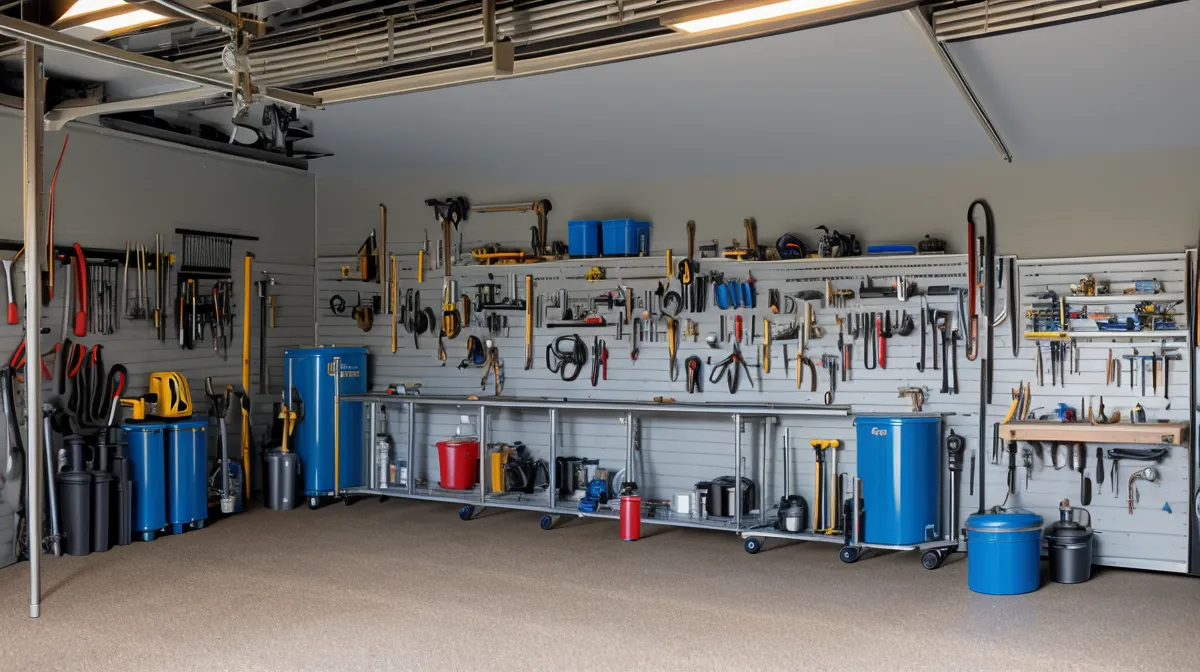
What does it actually cost, not just in dollars but in weekends, patched mistakes, and generator wattage, to build your own water-from-air machine in a two-car suburban garage? I kept circling that question after our tap water went out for days when Hurricane Beryl rolled through, and eventually I pulled up the Water Freedom System blueprint on my laptop to find out whether an atmospheric water generator was something an ordinary homeowner could actually assemble, not just read about.
Before any of the fittings or copper coils, here's the disclosure part I owe you: this site runs on affiliate links, so I earn a commission if you buy something through one, at no extra cost to you. Everything I write about is gear I've actually dragged into my own garage and tested. I'm an IT support technician, not a licensed plumber or water treatment engineer, so treat anything here as a starting point, not a substitute for your local codes or a professional opinion before you touch household utilities.
Blueprint on Screen, Reality in the Hardware Aisle
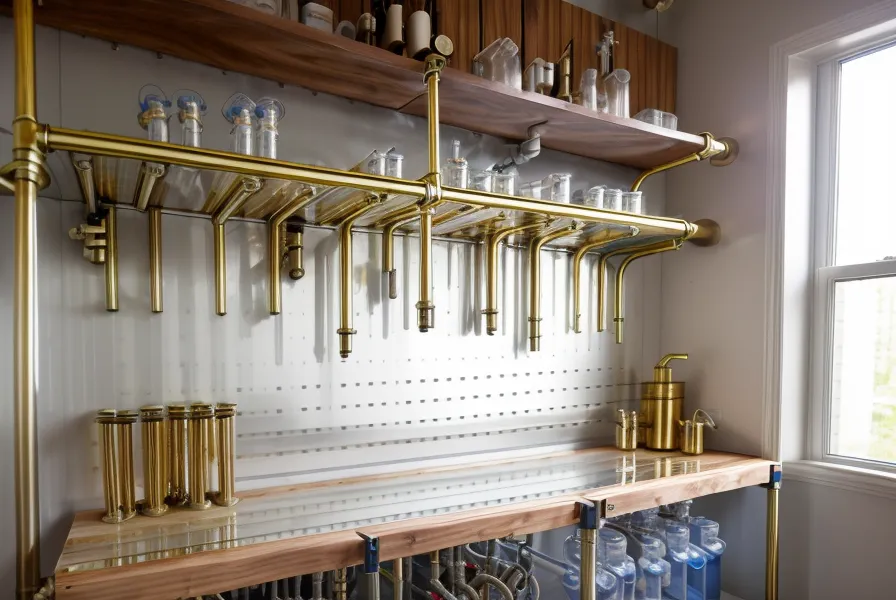
Troubleshooting a flaky network starts the same way every time: check the switch, check the patch cables, check what's actually plugged into what. Reading through the Water Freedom System schematic felt like that first step — familiar, orderly, almost too clean. The whole concept hangs on an atmospheric water generator: cool humid air past its dew point, let the moisture condense on a set of coils, then run the collected drip through a filtration stage before it's anything close to drinkable.
Digital access comes through the moment you pay, and a printed copy adds a flat shipping charge if you'd rather have paper in hand than a PDF — a detail that matters less than the 60-day refund window backing the whole guide, which gave me room to actually try building the thing before deciding whether it was worth keeping. None of that prepared me for the gap between the schematic and a real parts bin.
One Saturday last February, I walked into the local home improvement store with a scribbled parts list, expecting to knock it out in an hour. It took closer to three weeks of running between plumbing suppliers, because the guide treats brass barb fittings and food-grade vinyl tubing like something you'd find in one aisle, and the actual search for parts that didn't leak under a little backpressure meant more counter conversations and more returns than I want to admit.
Fitting a Condenser Build Into an Already-Crowded Garage
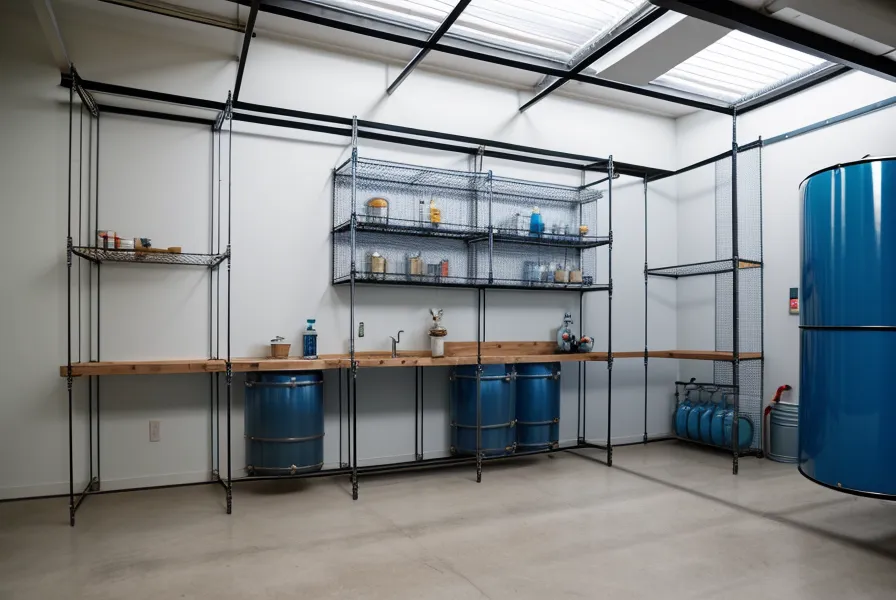
My garage already had a job before this project showed up. Two 55 gallons industrial food-grade storage drums sit against the back wall as our baseline water reserve, and I learned the hard way that filling one all the way is basically a one-way decision — once that drum is full, it isn't something you nudge six inches to make room for a condenser frame, it's something you plan around from day one. Squeezing an experimental build between the lawn mower, the storage shelving, and my wife's sedan meant tearing apart and rebuilding the workbench twice.
That same pair of drums gave me a smaller, quieter lesson later on. We left town for a week in July — peak Gulf Coast heat, garage running well past ninety most afternoons — and when we got back, nothing had changed. No haze inside the plastic, no crust where the lid seals, no warping along the seam. Knock on an empty one sometime and you get this hollow, almost toy-like sound that doesn't match how heavy it gets once it's full; that gap between the sound and the weight is the kind of thing you only notice once you've hauled a few.
The actual condenser build is less like installing an appliance and more like building a custom PC from bare components instead of buying a tower off the shelf — mounting the condensing unit, wiring power safely, sealing collection pans, plumbing a drain bulkhead. Every joint is a place where something can go wrong, and one of mine did. Rushing to attach a drain valve during a late-night session, I stripped the threads on a plastic bulkhead fitting and watched several gallons spread across the garage floor. Mopping up a flood at midnight on a weeknight has a way of making you reconsider the whole project.
A neighbor who coaches a youth soccer league on Saturday mornings stopped by to borrow a ladder around then, took one look at the tangle of tubing on my workbench, and asked, half-joking, if I'd taken up moonshining (I had not, though I can see why it looked that way). My wife's reaction was quieter — she just stood in the doorway with two mugs of coffee, staring at the mess, radiating an opinion she didn't need to say out loud about the fact that we already have indoor plumbing.
How Gulf Coast Humidity Performs
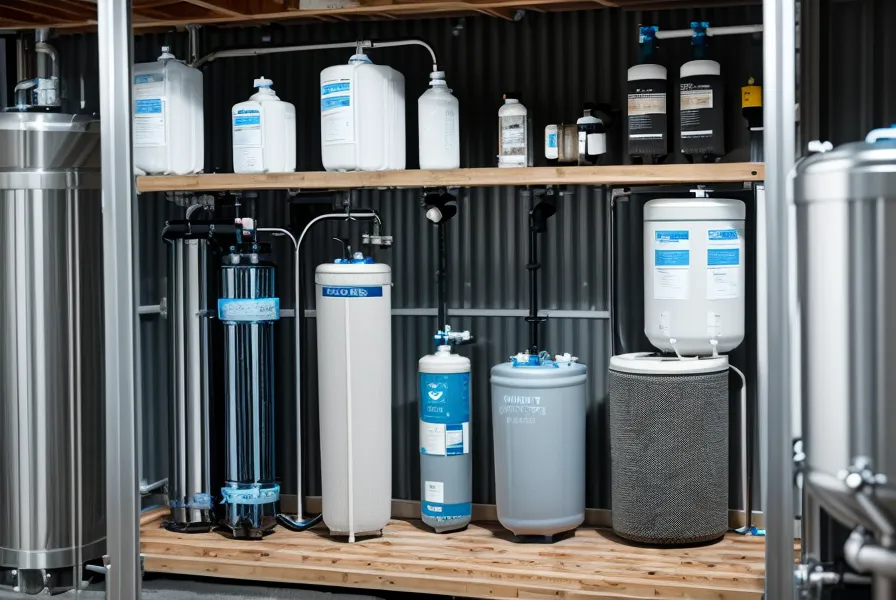
By late May, with the air outside thick enough to feel, conditions were about as good as they get for pulling water from it. The underlying physics is simple to state and harder to argue with: condensation needs humid air cooled past its dew point, and a basic condenser setup needs the air reasonably humid to begin with, full stop — the finer mechanics belong in a deeper breakdown than this one. Standing at the workbench, I listened to the compressor's hum compete with a neighbor's lawnmower while a thin trickle hit the collection bucket. It worked. It just worked slowly, and only for as long as the compressor kept running.
That continuous runtime is the catch. FEMA's baseline guideline — a gallon per person per day for drinking and basic sanitation — doesn't go away just because your water source is condensation instead of a tap, and a family of three or four needs the compressor cycling for hours to keep pace. If the grid drops, which is usually exactly when municipal water pressure fails during a bad storm, a home-built compressor rig needs a generator or a serious battery bank behind it to keep producing anything at all.
The Renter's Problem No Blueprint Accounts For

Nearly every build guide in this space assumes you own a detached house with a private garage and nobody checking your work. Try running that same project from a third-floor apartment instead. Lease clauses generally ban noisy compressors running continuously on a balcony, you can't drill bulkhead penetrations into a shared building envelope, and a cracked valve doesn't just puddle on a concrete slab — it soaks through drywall into the unit below you.
That gap is exactly where a factory-built, self-contained unit like the SmartWaterBox earns its place. Instead of copper tubing, relays, and a custom drip pan assembled by hand, you get a sealed appliance that plugs in and runs without touching the building's structure. Pricing moves around with promotions, so check the vendor's page directly, but for anyone boxed in by a lease or just short on workshop time, an enclosed unit sidesteps the fabrication headache entirely.
Off-Grid Water Gadget or Ready-Made Backup: The Real Trade-Off
Here's how I'd sort the decision after going through both sides of it. Build from a blueprint like the Water Freedom System when you genuinely enjoy weekend shop projects, already own a stash of tools, and want to understand how dew points, coils, and filtration fit together — the education is real, even when the execution is messy. Buy a ready-made unit when your actual goal during an outage is getting water into a glass with the least possible friction, especially if you rent, live in a multi-unit building, or simply don't have a workbench to spare.
For most households, pairing stored reserves with an out-of-the-box generator covers more ground than either approach alone — static containers handle the first hours of an outage, a self-contained unit covers the stretch after that if the power holds. If you want the deeper math on stored water containers versus pulling water from the air over the long run, I broke that down separately in Water Freedom System vs Bottled Water: The Math on Long Term Savings, and the mechanics of the atmospheric side get a fuller treatment in Can It Really Pull Water from Thin Air?
When the power's out and the forecast looks ugly, the last thing you want is to be hunting for Teflon tape and re-threading a bulkhead fitting. You want water coming out of something that already works.