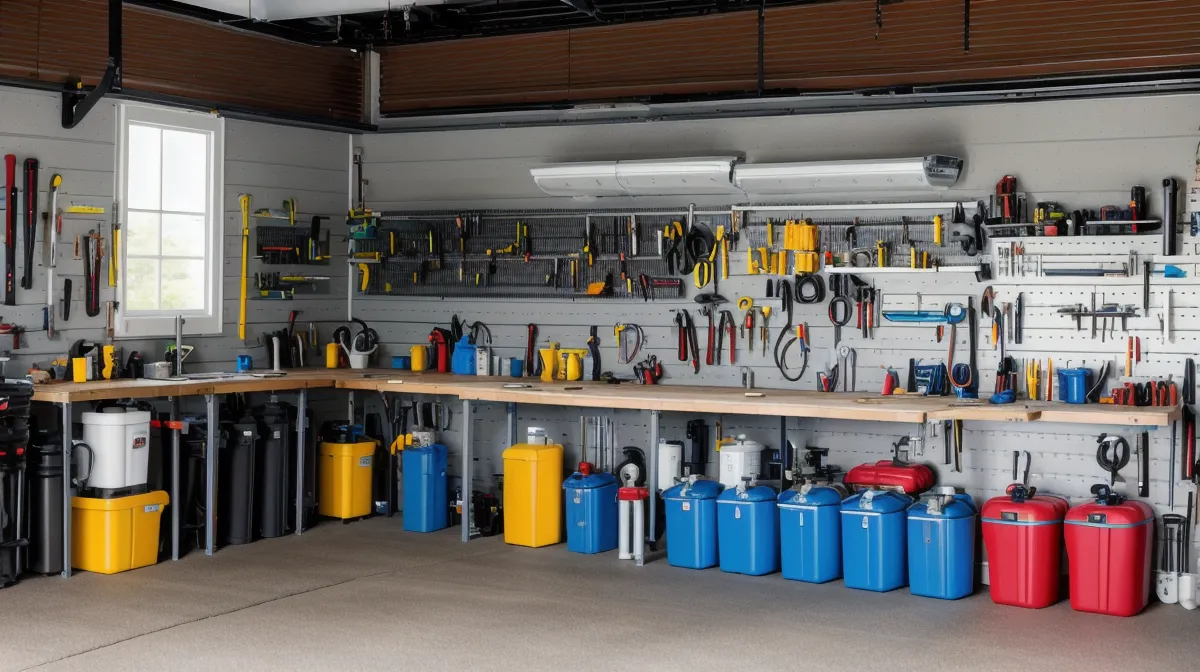
Late one stormy evening, rain was drumming against the garage door while I was elbow-deep in plastic buckets, running turbidity tests across portable filters. My wife poked her head out to ask why our workbench looked like a municipal utility station, and honestly, she had a fair point.
Before getting into the grime, a quick note on how I run things around here: I bought these units myself for home backup testing, and this site uses affiliate links. If you end up picking up gear through links on this page, I earn a commission at no extra cost to you. I only write about gear I personally take out of the box, hook up, and run water through in my own garage. You can read my full transparency policy whenever you like.
Ever since Hurricane Beryl knocked out our neighborhood’s municipal water pressure for four straight days back in 2024, I have looked at plumbing differently. When municipal lines depressurize, back-siphonage can pull groundwater contamination straight into the neighborhood grid. FEMA recommends storing at least 1 gallon of water per person per day—half for hydration and half for sanitation. For a family, that volume adds up fast, which is why having an active purification tool tucked in a cabinet is essential. If you want to jump straight to my primary budget test unit, check out the Dark Reset portable purifier to see its current specs and pricing on their site.
The Setup: Bench Testing in a Suburban Garage
I am an IT support tech by trade. When a network goes down, you do not guess which switch died—you isolate cables, test ping packets, and rule out failure points one by one. I brought that exact troubleshooting approach into my water prep early in the spring of 2026, when forums and prepping boards kept arguing whether the Dark Reset or David's Shield was the superior emergency purifier.
Both devices promise to render questionable water safe when the grid falters, but their mechanical architecture is fundamentally distinct. To test them fairly, I gathered water from two sources: murky rainwater run-off from my roof gutters collected in clean totes, and particulate-heavy ditch water collected near a local drainage culvert. I also kept standard household 6% unscented bleach on standby—the EPA emergency disinfection baseline is 8 drops per gallon if you are treating clear water chemically, but chemical drops do not clear suspended solids or chemical runoff. You need physical filtration for that.
I set up a clean baseline using my standard garage workbench, a pair of graduated five-gallon buckets, silicone hosing, and a digital timer. If you are also figuring out your interior layout, check out my notes on how to store emergency water in a guest bedroom without making a mess to see how storage logistics fit into the wider picture.
Pore Size, Parasites, and Pumping Mechanics
To understand whether either unit actually works, you have to look at biological scale. Common waterborne protozoan cysts like Cryptosporidium and Giardia generally measure between 1 and 15 microns. Most reputable emergency membranes utilize a hollow-fiber core with an absolute rating of 0.1 microns. At 0.1 microns, those nasty protozoa and common bacteria are physically blocked—they simply cannot squeeze through the microscopic channels.
Both the Dark Reset and David's Shield sport microfiltration membranes capable of stopping these contaminants. But filtering water is not just about catching sediment; it is about the hydraulic force required to push dirty fluid through those tight 0.1-micron corridors. And that brings us to how these two handle pressure.
The Dark Reset relies on an inline mechanical hand pump. You drop the intake hose with its pre-filter screen into your raw water bucket, run the clean discharge hose into your receiving vessel, and stroke the plunger back and forth. David's Shield, on the other hand, utilizes a gravity-assisted passive siphon arrangement paired with a multi-stage canister filter that feeds from an elevated bucket downward into your clean container.
The Real-World Difference: Manual Labor vs. Passive Flow
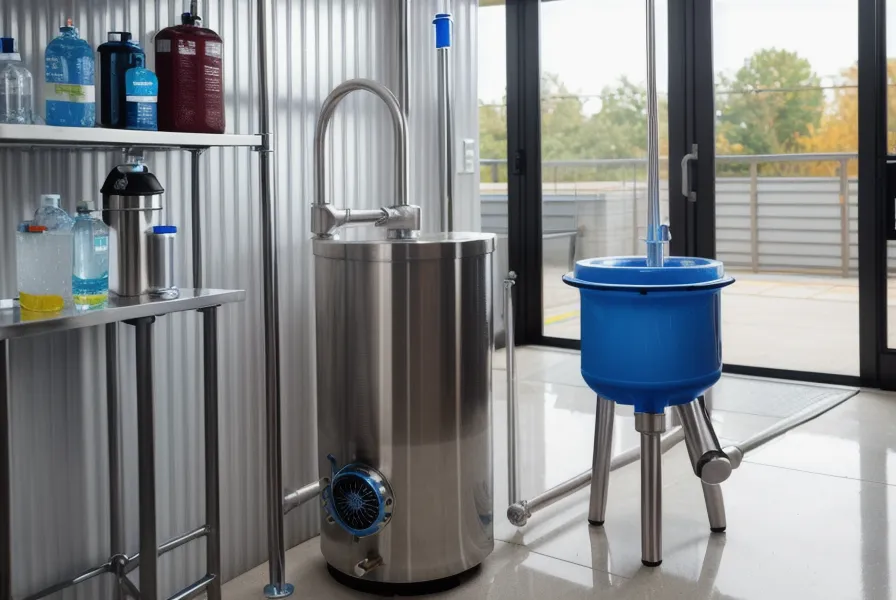
One muggy Saturday afternoon in June, with ambient garage temperatures hovering around ninety degrees, the practical difference between these two devices slapped me right in the forearms. I set out to produce four gallons of clean water with each system—enough to cover our household needs for twenty-four hours based on standard emergency guidelines.
Here is what marketing brochures never tell you: Dark Reset requires significantly more manual physical effort to achieve the same volume of purified water compared to the passive filtration process used by David's Shield. Pumping the Dark Reset for a single twelve-ounce tumbler feels effortless. It is crisp, light, and produces a steady stream. But pumping four gallons through a 0.1-micron core against hydraulic resistance takes roughly forty-five minutes of steady, unbroken arm motion.
By gallon three, my triceps were burning, my palms were sore, and sweat was dripping off my chin onto the concrete floor. It reminded me of trying to manually reset dozens of remote routers via command line on a Friday afternoon—it works, but your hands hate you by the end. In contrast, setting up David's Shield took five minutes to prime the hose and establish the siphon. Once the head pressure took over, it trickled passively into the bottom jug while I went inside to fix lunch. For another perspective on this match-up, read my earlier breakdown on David's Shield vs Dark Reset reliability testing.
Clogging, Turbidity, and Maintenance After Six Weeks
After about six weeks of bench testing across various sediment loads, a different side of the equation emerged. While David's Shield won hands-down on physical convenience, its passive flow rate crawled to a near-halt whenever I introduced heavy silt from the drainage culvert. Without manual pump pressure to overcome the resistance of a caked pre-filter, gravity alone could not maintain adequate throughput.
The Dark Reset, despite demanding genuine sweat equity, could be forced through tougher sediment layers simply by applying muscle. Furthermore, backwashing the Dark Reset with its included plunger syringe was straightforward and took less than two minutes at the garage sink. David's Shield required unscrewing the housing, rinsing the primary cartridge carefully, and re-priming the lines to purge air bubbles. If air gets trapped in a passive siphon line, the flow stalls out completely.
I did make a classic rookie mistake during one run: I forgot to seat the intake O-ring correctly on the Dark Reset after inspecting the internal piston. Water sprayed sideways across my pegboard before I realized the seal was pinched. A quick reminder: I am an IT guy, not a certified plumber or medical authority, so definitely consult public health resources or local water quality advisories when treating compromised water during a crisis.
Where Integrated Systems Outshine Handheld Units
Late in August, as hurricane season entered its peak, I took a step back and evaluated my entire garage rack. Portable purifiers like the Dark Reset and David's Shield have clear utility: they are compact, weigh very little, and pack neatly into an emergency go-bag or a vehicle console. But if your goal is maintaining home hydration during a prolonged grid failure without turning your garage into a manual labor camp, relying entirely on small handheld pumps gets old quickly.
That realization led me to examine all-in-one residential solutions like the SmartWaterBox, which combines pre-plumbed filtration, high-capacity storage, and pressurized delivery into a single cohesive platform. Instead of pumping a piston until your arms ache or babysitting elevated siphon hoses, an integrated unit manages the hydraulic heavy lifting automatically. For families with space to plan ahead, you can read my comprehensive field evaluation in my top home water backup systems after a year of testing.
If you prefer a DIY route involving off-grid atmospheric water harvesting or manual builds, programs like the Water Freedom System offer step-by-step schematics, though they require building components yourself rather than opening a ready-to-run box.
The Final Verdict: Which One Belongs on Your Shelf?
So, which portable purifier actually works? Both do—provided you deploy them according to their mechanical strengths. If you want a zero-effort system that runs unattended while you board up windows or check on neighbors, David's Shield provides gentle, passive filtration that spares your shoulders.
However, if you want an affordable, rugged, highly portable unit that you can throw in a backpack and force through dirty water regardless of terrain or bucket height, the Dark Reset is the tool I keep in our vehicle kit. You pay for it in physical exertion, but its ability to pump under active pressure makes it remarkably dependable when quick hydration is on the line. Current pricing and availability fluctuate depending on supply runs, so check the vendor's page directly to see what they have in stock before storm season hits.